Origins & Geology
Found in: India, Brazil, Russia, USA, Madagascar
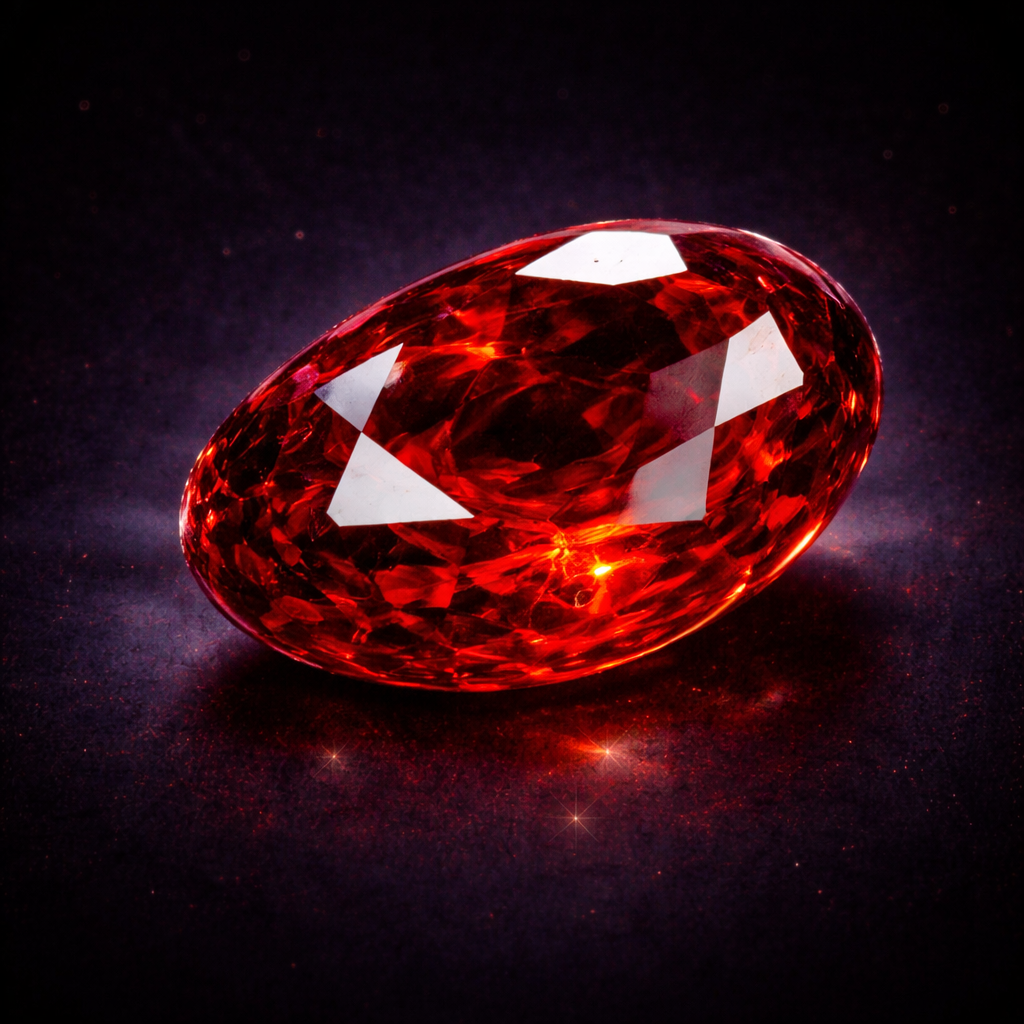
Garnet is a group of silicate minerals sharing a common crystal structure but varying widely in composition and color – from deep red to green, orange, and colorless. The most familiar variety, almandine, gets its rich red from iron and aluminum. Garnets form under high pressure in metamorphic rocks and are found worldwide.
Garnet Meaning & Healing Properties
Garnet is the stone of passion, vitality, and commitment. It revitalizes depleted energy, strengthens willpower, and sparks creative fire. Red garnet in particular has been worn by warriors and lovers throughout history as a talisman of courage and devotion. It is said to bring success in business and align the base chakra.
How to Use Garnet
- Energising and revitalising
- Boosting passion and creativity
- Grounding and root chakra work
- Attracting love and commitment
- Overcoming depression and lethargy
Garnet Facts
- Garnet is the January birthstone
- Ancient Romans exchanged garnet signet rings as tokens of friendship
- Garnet occurs in almost every colour except blue
- The word garnet comes from Latin 'granatus' – resembling pomegranate seeds
How to Cleanse and Charge Garnet
Garnet is hard, at 6.5 to 7.5 depending on the variety, and chemically stable, so a brief rinse in cool water is fine and sunlight does it no harm. The weakness is internal: many garnets carry fractures and inclusions, and sudden temperature changes or ultrasonic cleaners can extend them. Avoid hot water, avoid salt soaks, and dry it properly. A soft cloth restores the lustre. Any of the usual charging methods — moonlight, sound, earth — suit it well.
How to Spot Fake Garnet
Red glass is the main imitation and is easy to catch. Garnet is dense and cold, with a high refractive index that gives it real depth and fire, while glass looks flat, feels lighter and warms quickly in the hand. Under a loupe, glass shows round bubbles and sometimes swirl marks; garnet shows angular inclusions and occasional needle-like rutile. Synthetic garnet exists but is mostly a jewellery-trade material. Be aware also that garnet is a family rather than a single mineral, so a green garnet or an orange one is not automatically fake.
What to Pair Garnet With
Garnet is a stone of vitality and commitment, so it sits well with carnelian for energy and drive and with black tourmaline when that energy needs a boundary. Rose quartz makes it gentler and turns the focus towards relationships rather than raw drive. Because garnet is traditionally worn rather than placed, it is often the stone in a piece of jewellery while softer crystals stay at home.
Questions People Ask About Garnet
Can garnet go in water?
Yes, briefly. It is hard and chemically stable. Avoid hot water, ultrasonic cleaners and long soaks, which can worsen the internal fractures many garnets carry.
Is garnet always red?
No. Garnet is a mineral family, and it occurs in orange, green, yellow, pink and even colour-changing varieties. Deep red almandine is simply the most familiar.
How do I tell garnet from red glass?
Weight and depth. Garnet is dense, cold to the touch and has real internal fire; glass feels light, warms fast, looks flat and often contains round bubbles.
What is garnet used for?
Traditionally for vitality, courage and commitment — it has an old reputation as a travellers' stone and as a token of loyalty.
Where to get Garnet
If you want to work with Garnet as a physical stone, here are three forms commonly used.
As an Amazon Associate, we earn from qualifying purchases.