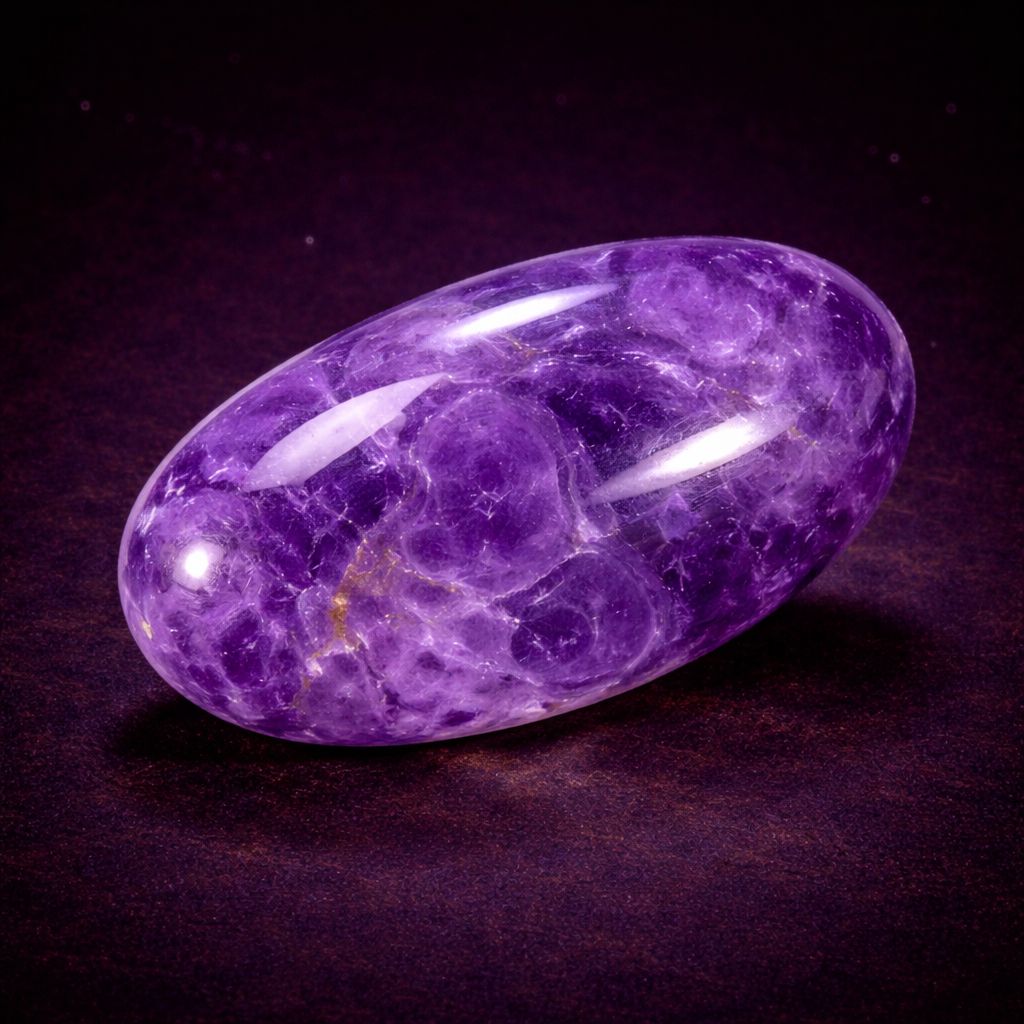
About Amethyst
Amethyst is a violet variety of quartz, coloured by iron impurities and natural irradiation within the crystal lattice. Its colour ranges from pale lilac to deep royal purple. The finest specimens come from Brazil, Uruguay, and Zambia – where deep "Siberian" purple amethysts are among the most valued.
Chemically, amethyst is silicon dioxide (SiO₂) with traces of iron that give it its characteristic hue. Heat treatment can transform amethyst into citrine (yellow) – both belonging to the same quartz family. The colour fades with prolonged exposure to direct sunlight.
Amethyst Meaning & Symbolism
The name comes from the Greek amethystos – "not intoxicated." The ancient Greeks believed wearing amethyst prevented drunkenness, and carved wine goblets from it. This gave it a dual symbolism: sobriety and clarity of mind on one hand, and the mysterious depth of wine and Dionysian pleasure on the other.
In metaphysical tradition, amethyst is the premier stone of the crown chakra – the energy centre of higher consciousness, spiritual connection, and divine intuition. It is associated with the planet Neptune and the realm of dreams, imagination, and psychic awareness.
Healing Properties
Emotional
Amethyst is a natural tranquiliser – it relieves stress and strain, soothes irritability, and balances mood swings. It is considered excellent for overcoming addiction, compulsive behaviour, and anxiety. Many people keep amethyst under their pillow to reduce nightmares and insomnia.
Physical
Traditionally used to support the nervous system, brain, and hormonal glands. It is said to ease headaches, reduce tension, and support detoxification. Its connection to the crown makes it useful for any issues involving the head and mind.
Spiritual
Amethyst opens the third eye and crown chakras, strengthening intuition and psychic ability. It creates a protective energy field, shielding the aura from negative influences. Ideal for meditation – it quiets the mind and facilitates access to deeper states of consciousness.
History & Lore
Amethyst was as precious as ruby and emerald until the 19th century, when large deposits were discovered in Brazil. Before that, it was among the most valued of all gemstones and adorned the crowns and rings of European royalty and the Catholic Church – bishops still traditionally wear amethyst rings today.
Leonardo da Vinci wrote that amethyst "dissipates evil thoughts and quickens the intelligence." The ancient Egyptians used it in amulets. The British Crown Jewels include several notable amethysts.
Other February Birthstone Facts
- Amethyst is the traditional gift for a 6th and 17th wedding anniversary
- The world's largest amethyst geode – "The Empress of Uruguay" – stands 3 metres tall
- Amethyst is the state gemstone of South Carolina
- At sunrise, the finest specimens show a secondary red flash called "raspberry"
- Synthetic amethyst has been produced commercially since the 1970s
How to Wear and Use Amethyst
Amethyst is one of the few stones people both wear and keep at home in roughly equal measure. In jewellery it works because at hardness 7 it survives daily wear. At home it usually ends up beside the bed, since amethyst is associated with sleep, quiet and a settled mind, and that is by far its most common use.
For anxiety it is carried in a pocket and picked up when noticed. The point is not the ritual but the pause: a physical object gives attention somewhere to land.
February Zodiac Signs and Their Stones
Born before 18 February and you are an Aquarius; from the 19th, a Pisces. Amethyst is traditionally given to both, but for different reasons — to Aquarius for clarity of thought, to Pisces for its links with intuition and dreaming.
Beyond amethyst, Pisces is often pointed towards moonstone and aquamarine, Aquarius towards garnet and sodalite. If the month's stone leaves you cold, the sign gives a second option.
How to Cleanse and Charge Amethyst
Amethyst and water get on fine: it is quartz, and a short rinse in cool water does no damage. Sunlight is the problem. Ultraviolet light breaks down the colour centres that make it violet, and the fading to grey-brown is permanent. A crystal left on a sunny windowsill for a summer will not come back.
Charge it by moonlight, with sound, or on dry salt. Hot water and sudden temperature changes are best avoided, since amethyst usually carries fine internal fractures.
How to Spot a Fake Amethyst
Fakes come in two forms: synthetic quartz grown in a lab, and ordinary quartz that has been dyed. Look at how the colour is distributed. Natural amethyst is almost always uneven, with darker zones near the crystal tips and a paler, almost clear base. Dyed stone is suspiciously uniform, and the dye pools visibly in cracks.
Glass imitations give themselves away with round air bubbles and with warmth — real quartz is cold and takes a moment to warm in your hand.
Questions People Ask
What is the birthstone for February?
Amethyst. It has held the month in both modern and older lists, and its name comes from the Greek amethystos — 'not intoxicated'.
Why has my amethyst faded?
Sunlight. Ultraviolet light destroys the colour centres that make amethyst violet, and the fading is permanent. Charge it by moonlight rather than on a windowsill.
Can amethyst go in water?
Briefly, yes — it is quartz. Avoid hot water, long soaks and salt water, which work into the internal fractures amethyst usually carries.
Can you sleep with amethyst?
Many people do, under the pillow or on the bedside table, using it for restless sleep. If you find it makes your mind more active rather than less, move it further from the bed.
Where to get Amethyst
If you want to wear or work with Amethyst as a physical stone, here are three forms commonly used.
As an Amazon Associate, we earn from qualifying purchases.