Origins & Geology
Found in: Brazil, Uruguay, Zambia, South Korea
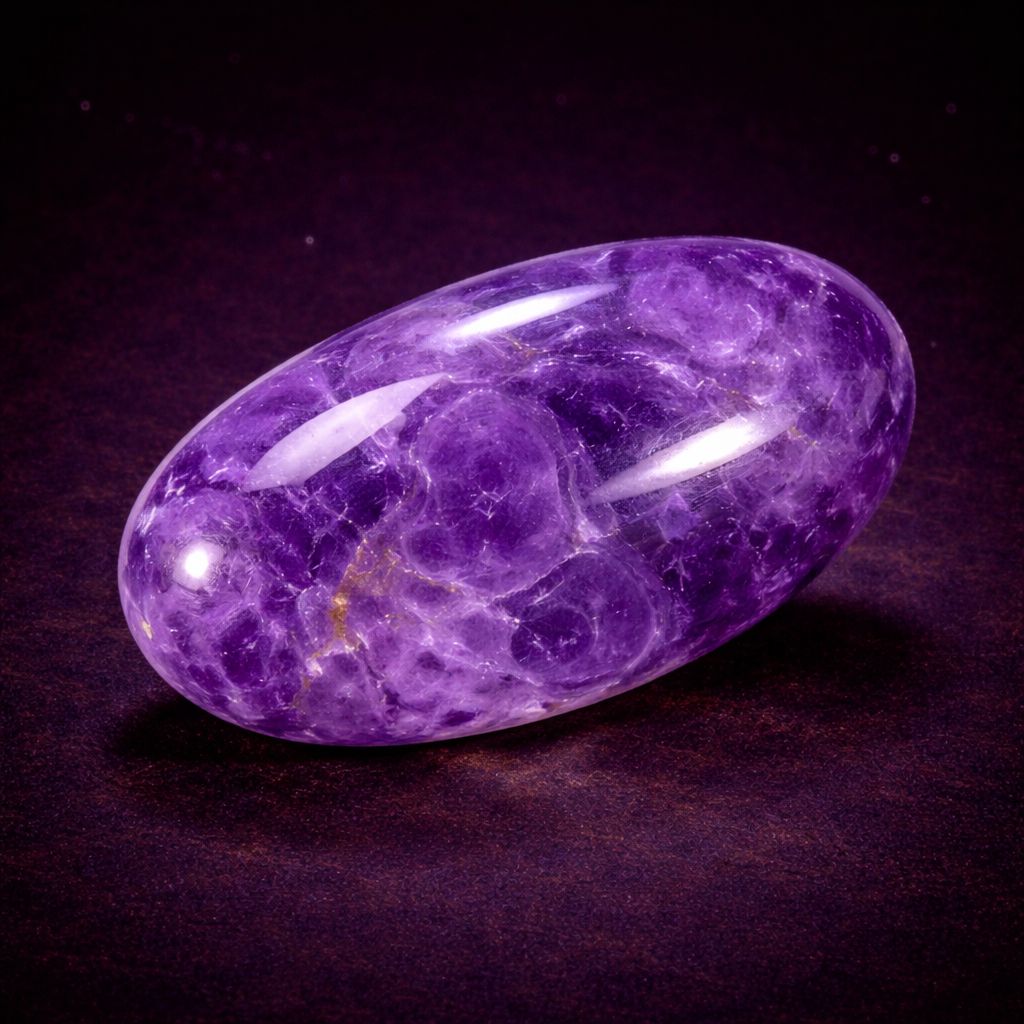
Amethyst is a violet variety of quartz, colored by iron impurities and natural irradiation. It forms inside volcanic rock cavities called geodes, sometimes growing to enormous sizes. The name comes from the Greek amethystos – 'not intoxicated' – as ancient Greeks believed it prevented drunkenness.
Amethyst Meaning & Healing Properties
One of the most powerful protective stones, amethyst creates a shield of light around the aura. It activates the third eye and crown chakras, enhancing intuition, spiritual awareness, and psychic abilities. Healers use it to calm the mind, aid meditation, and support sobriety and emotional balance.
How to Use Amethyst
- Meditation and spiritual practice
- Reducing anxiety and stress
- Improving sleep quality
- Protection against negative energy
- Enhancing intuition and psychic awareness
Amethyst Facts
- The world's largest amethyst geode 'The Empress of Uruguay' stands 3 metres tall
- Amethyst loses its colour with prolonged exposure to sunlight
- It was as valuable as ruby and emerald until large deposits were found in Brazil in the 19th century
- Leonardo da Vinci wrote that amethyst 'quickens the intelligence'
How to Cleanse and Charge Amethyst
Amethyst is quartz, so a short rinse under cool running water does it no harm. The thing that ruins amethyst is light: the iron colour centres that make it violet are undone by ultraviolet, and a crystal left on a sunny windowsill will drift to grey-brown over a few months. That change is permanent. Charge it under moonlight instead, or on a bed of dry salt, or leave it overnight beside selenite. Avoid hot water and sudden temperature swings, which can widen the fine internal fractures most amethyst carries.
How to Spot Fake Amethyst
Most fake amethyst is either synthetic quartz grown in a lab or ordinary quartz that has been dyed. Look at the colour distribution: natural amethyst is almost always unevenly coloured, with darker zones near the crystal tips and paler, almost clear regions towards the base. Dyed stone is suspiciously uniform, and the colour often pools in cracks. Glass imitations give themselves away with round air bubbles and a warmth to the touch — real quartz feels cold and takes a moment to warm in your hand.
What to Pair Amethyst With
Amethyst works well with clear quartz, which amplifies it, and with selenite for a calm, high-clarity pairing many people keep by the bed. With rose quartz it makes a gentle heart-and-mind combination for grief or anxiety. Pair it with citrine — the two are the same mineral in different colours — for the classic balance of calm and drive. If you are sensitive to intense stones, keep amethyst away from moldavite until you know how you react to each on its own.
Questions People Ask About Amethyst
Can amethyst go in water?
Yes, briefly. Amethyst is quartz and hard enough to rinse under cool running water without damage. Avoid hot water, long soaks and salt water, which can work into the internal fractures common in amethyst.
Why has my amethyst turned pale?
Sunlight. Ultraviolet light breaks down the iron colour centres that make amethyst violet, and the fading is permanent. Keep it out of direct sun and charge it by moonlight instead.
What chakra is amethyst for?
The third eye and crown chakras. That is why it is used for meditation, intuition and quieting a busy mind rather than for grounding or physical energy.
Can you sleep with amethyst?
Many people do, either under the pillow or on the bedside table, and use it for restless sleep and vivid dreaming. If you find it makes your mind more active rather than less, move it across the room.
Where to get Amethyst
If you want to work with Amethyst as a physical stone, here are three forms commonly used.
As an Amazon Associate, we earn from qualifying purchases.