Origins & Geology
Found in: Brazil, Canada, Namibia, India, Russia
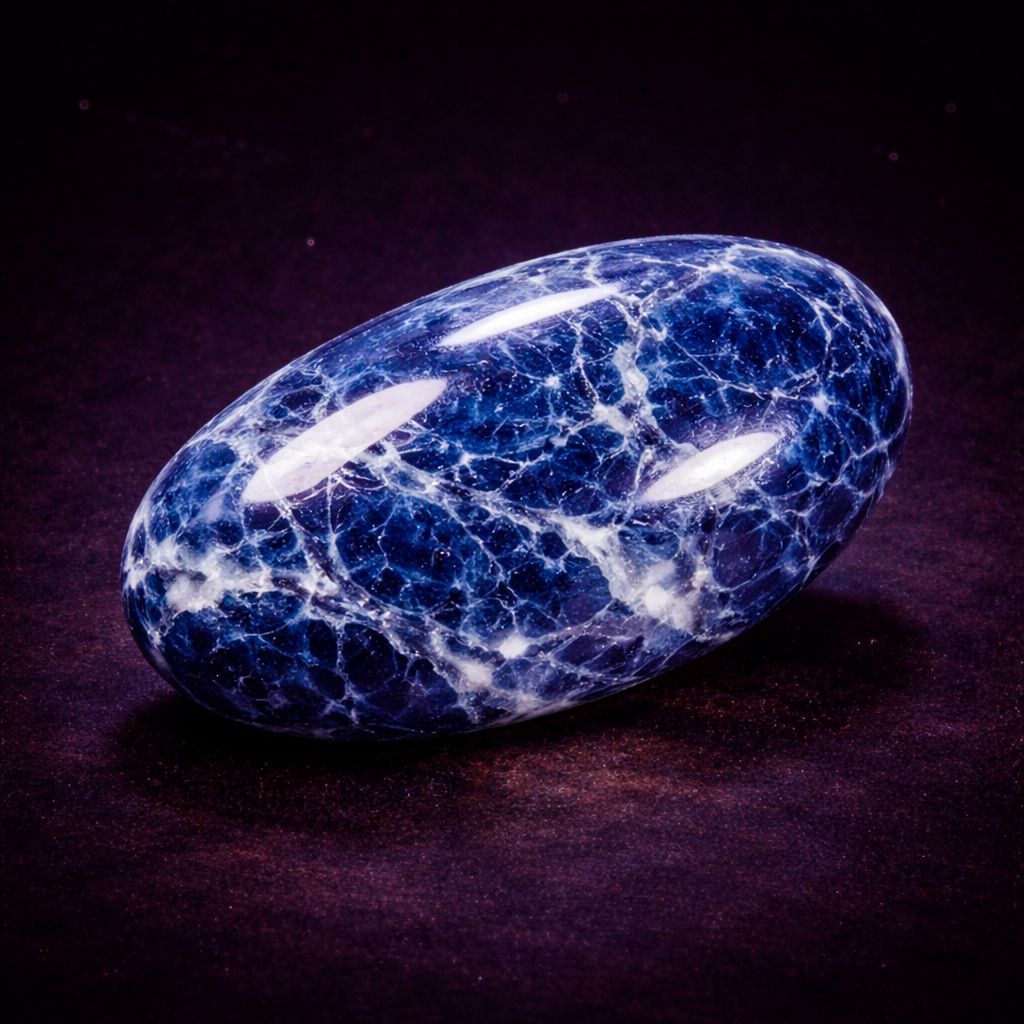
Sodalite is a rich royal blue mineral of the feldspathoid group, often containing white calcite veining. It is found in alkaline igneous rocks and is a major component of the rock lapis lazuli (along with lazurite and pyrite). Unlike lapis lazuli, sodalite rarely contains pyrite flecks. First described in Greenland in 1811.
Sodalite Meaning & Healing Properties
Called the 'stone of truth' and 'the philosopher's stone', sodalite promotes rational thought, objectivity, and clear perception. It calms mental chatter and deepens intuition. Unlike lapis, sodalite works more on the intellectual mind than pure intuition – it bridges logic and spiritual insight. It is used to enhance group communication and creative expression.
How to Use Sodalite
- Calming overthinking and mental chatter
- Enhancing logic and rational thought
- Group communication and harmony
- Truth-telling and honest expression
- Bridging intellect and intuition
Sodalite Facts
- Sodalite is often confused with lapis lazuli but lacks the golden pyrite flecks
- Princess of Wales (later Queen) Charlotte had sodalite brought from Bancroft, Ontario to decorate Marlborough House in London – hence 'Princess Blue'
- It was first described scientifically in Greenland in 1811
- Sodalite glows orange under UV light – a property called fluorescence
How to Cleanse and Charge Sodalite
Sodalite is moderately soft at 5.5 to 6 and slightly porous, so it takes a brief rinse but should never be soaked. Water works into the stone and can dull the deep blue and loosen the polish over time, and salt attacks the softer white veining. Prolonged sunlight will pale it. Wipe it with a dry or barely damp cloth, dry it properly, and use moonlight, sound or a rest on selenite to charge it. Store it away from quartz, which will scratch it in a shared pouch.
How to Spot Fake Sodalite
Sodalite is inexpensive, so it is more often the substitute than the thing substituted — it is regularly sold as lapis lazuli. The difference is easy once you know it: lapis contains brassy pyrite flecks and a richer, more purple-leaning blue, while sodalite has no pyrite and is marked with white calcite veining against a slightly greyer royal blue. Genuine sodalite of any grade shows uneven, patchy colour. Dyed howlite appears occasionally and gives itself away with colour pooling in the cracks and an unnaturally even body tone.
What to Pair Sodalite With
Sodalite sits in the analytical corner of the throat and third-eye stones, associated with rational thought, honest self-assessment and clear communication. It pairs naturally with lapis lazuli, which covers similar ground with more authority, and with fluorite for study and mental order. Amethyst softens it towards intuition. Clear quartz sharpens it. It is a common desk stone rather than a bedside one.
Questions People Ask About Sodalite
Can sodalite go in water?
Briefly. It is somewhat soft and slightly porous, so avoid soaking and salt water, both of which dull the surface and attack the white veining.
How do I tell sodalite from lapis lazuli?
Look for pyrite. Lapis has brassy gold flecks and a richer blue; sodalite has none and shows white calcite veining against a greyer royal blue. Sodalite is also considerably cheaper.
What is sodalite used for?
Traditionally for clear thinking, honest self-reflection and communication — it is associated with rational insight rather than emotional healing.
Does sodalite fade?
It can pale with prolonged sun exposure. Charge it by moonlight or sound rather than leaving it on a bright windowsill.
Where to get Sodalite
If you want to work with Sodalite as a physical stone, here are three forms commonly used.
As an Amazon Associate, we earn from qualifying purchases.