Origins & Geology
Found in: USA (Arizona), Peru, Chile, Congo, Israel
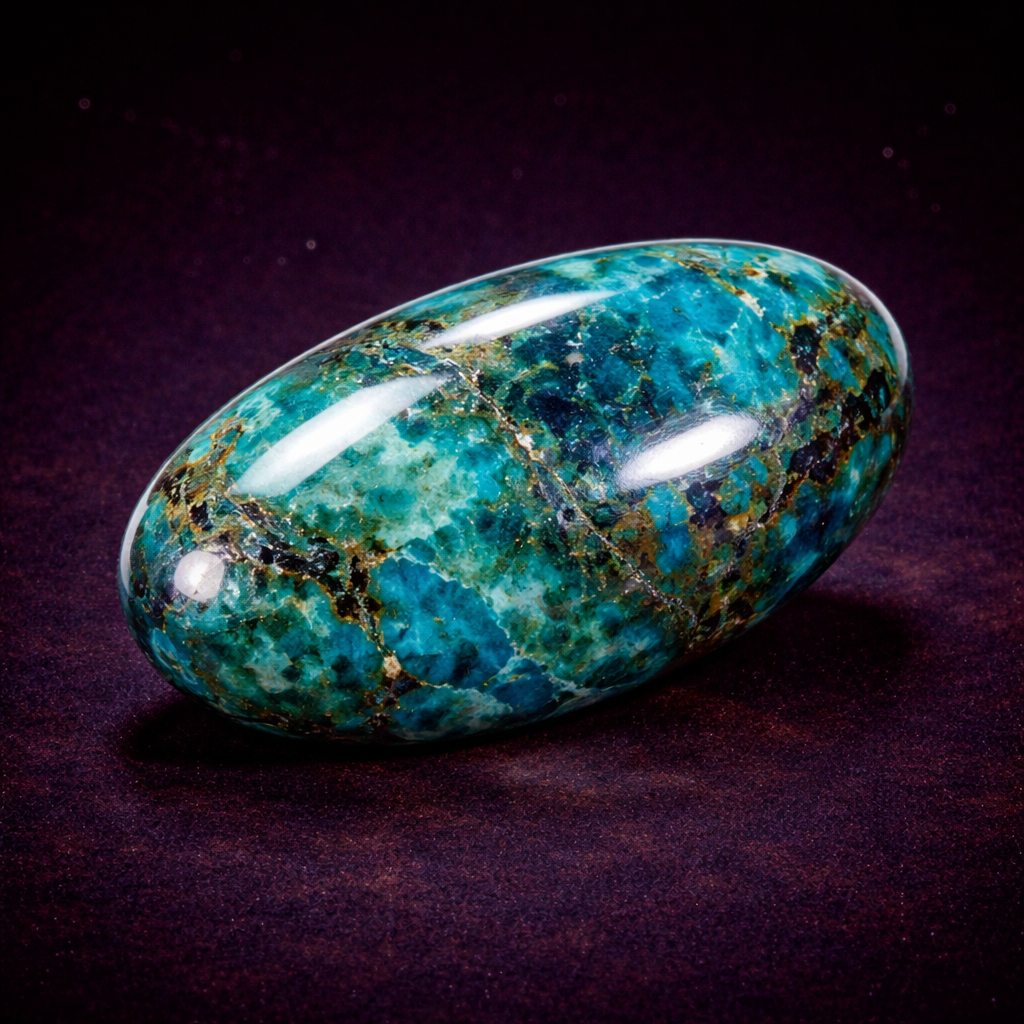
Chrysocolla is a hydrated copper phyllosilicate mineral that forms in the oxidized zones of copper ore deposits, often alongside malachite, azurite, and turquoise. Its color ranges from cyan to blue-green. The name comes from the Greek chrysos (gold) and kolla (glue) – it was once used in the soldering of gold.
Chrysocolla Meaning & Healing Properties
Called the 'teaching stone' and stone of goddess energy, chrysocolla empowers communication, gentle expression, and personal power. It was sacred to indigenous Andean cultures as a stone of peace and harmony. Cleopatra reportedly wore chrysocolla in all her meetings, believing it encouraged peaceful diplomacy. It soothes grief, eases heartbreak, and opens the throat to speak truth with love.
How to Use Chrysocolla
- Peaceful and empowered communication
- Teaching and public speaking
- Soothing grief and heartbreak
- Goddess energy and divine feminine
- Peaceful conflict resolution
Chrysocolla Facts
- Cleopatra was said to wear chrysocolla at all her diplomatic meetings
- The name means 'gold glue' in Greek – it was once used to solder gold
- It often forms alongside malachite and turquoise in copper deposits
- Chrysocolla with quartz (called Gem Silica) is one of the most valuable blue gemstones
How to Cleanse and Charge Chrysocolla
Chrysocolla is soft, porous and copper-bearing, which makes it one of the most fragile stones commonly sold. At 2.5 to 3.5 it can be scratched with a coin, water soaks straight into it and dulls the colour, and the copper content means the same caution as malachite applies: do not make direct elixirs with it, do not put it in drinking water, and wash your hands after handling raw material. Much of what is sold is chrysocolla stabilised in chalcedony, which is considerably more durable. Clean it dry, keep it out of sunlight, and store it on its own.
How to Spot Fake Chrysocolla
Dyed howlite and dyed magnesite are the usual imitations, along with reconstituted composites of chrysocolla powder and resin. Genuine chrysocolla has an uneven, drifting blend of cyan, turquoise and green — often with brown or black matrix and sometimes with malachite or azurite growing alongside it — and its surface has a slightly chalky, low lustre unless it has been stabilised. Dyed stone shows a flatter, more uniform colour with dye pooling in the cracks, and composites look suspiciously consistent across every bead in a strand.
What to Pair Chrysocolla With
Chrysocolla is a throat-chakra stone associated with speaking from a settled place rather than a reactive one, which pairs it well with amazonite and aquamarine. Malachite is its natural geological partner — the two form together in copper deposits — and the combination is a classic, though both need the same careful handling. Rose quartz softens it for grief work, which is one of the things chrysocolla is traditionally used for.
Questions People Ask About Chrysocolla
Can chrysocolla go in water?
No. It is soft and porous, and water soaks in and dulls the colour. The copper content also makes chrysocolla water unsafe to drink.
Is chrysocolla toxic?
Raw chrysocolla contains copper, so avoid making direct elixirs, do not put it in drinking water, and wash your hands after handling unpolished pieces. Stabilised and polished material is safe to hold.
Why is my chrysocolla scratched?
Because it is genuinely soft — 2.5 to 3.5 on the Mohs scale, soft enough to mark with a coin. Store it separately from every other stone you own.
What is chrysocolla used for?
Traditionally for calm expression, grief and speaking difficult truths gently. It has a long association with teaching and with communication under pressure.
Where to get Chrysocolla
If you want to work with Chrysocolla as a physical stone, here are three forms commonly used.
As an Amazon Associate, we earn from qualifying purchases.