Origins & Geology
Found in: Morocco, Mexico, USA (Utah), Australia
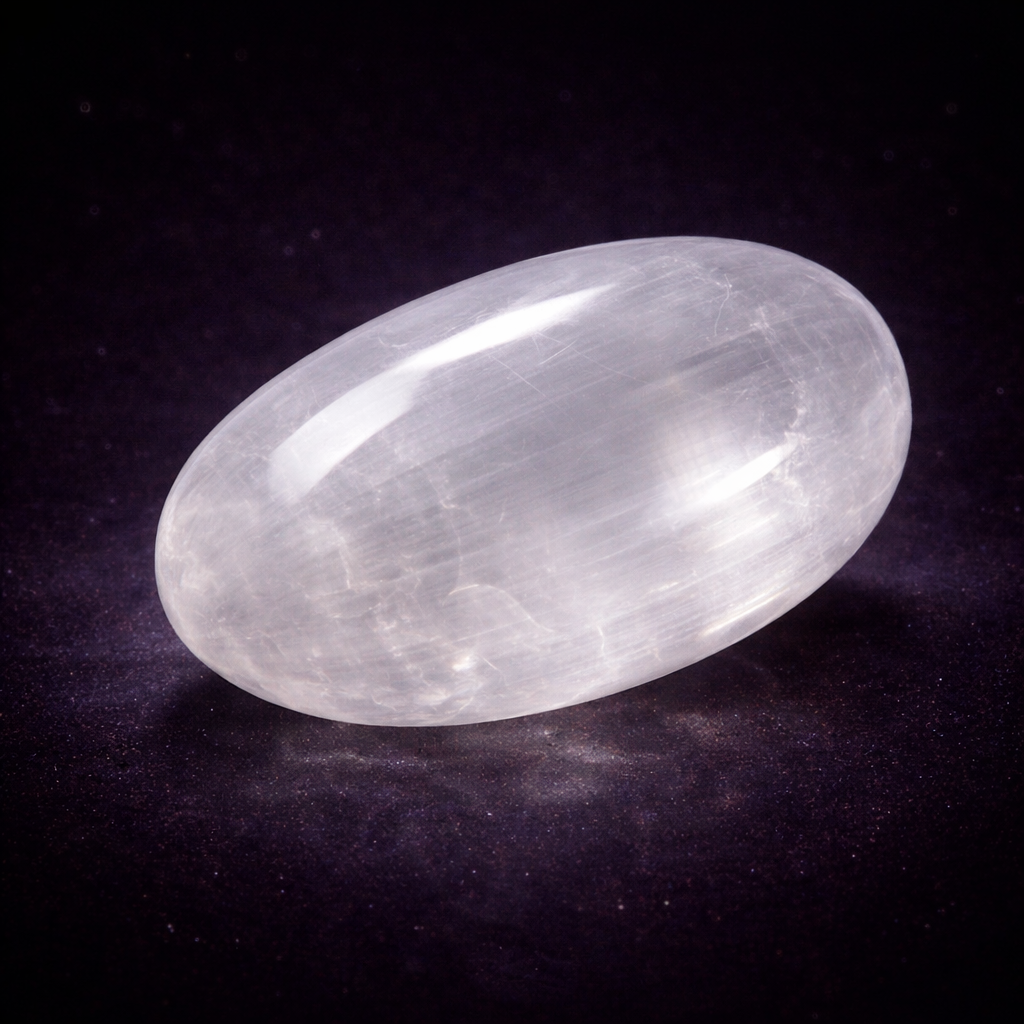
Selenite is a variety of gypsum (calcium sulfate dihydrate) that forms large, transparent crystals with a silky luster. The Naica Cave in Mexico contains selenite crystals up to 12 meters long – among the largest natural crystals on Earth. Selenite is extremely soft and soluble in water. Its name comes from Selene, the Greek goddess of the moon.
Selenite Meaning & Healing Properties
Selenite is one of the few crystals believed to cleanse and recharge other stones. It creates a protective grid when placed in the corners of a room, filling the space with high vibrational energy. Named for the moon, it enhances telepathy, past-life work, and access to angelic realms. It should never be placed in water.
How to Use Selenite
- Cleansing and charging other crystals
- Creating protective grids in a space
- Meditation and angelic connection
- Clearing mental fog
- Past-life regression work
Selenite Facts
- The Naica Cave in Mexico has selenite crystals up to 12 metres long
- Selenite dissolves in water – never submerge it
- It is one of the few crystals that self-cleanses
- Selenite wands are used to scan and clear the aura
How to Cleanse and Charge Selenite
This is the one stone where the care advice really matters: selenite is gypsum, it rates just 2 on the Mohs scale, and it is soluble in water. A rinse will make the surface cloudy and fibrous, a soak will visibly damage it, and leaving it on a damp surface overnight is enough to dull it permanently. Clean it by wiping with a dry cloth. It is soft enough to scratch with a fingernail, so store it away from harder stones. The good news is that selenite is generally considered self-cleansing and is used to charge other stones — moonlight, sound or simply leaving it out is all it needs.
How to Spot Fake Selenite
Outright fakes are less common than mislabelling. Most of what is sold as selenite is technically satin spar, a fibrous variety of the same mineral, gypsum — that is not a scam and the two behave identically, but purists distinguish them. The imitation to watch for is resin or moulded plastic sold as selenite towers and lamps: real selenite is cool to the touch, distinctly fibrous with a silky lengthwise sheen, and soft enough that a fingernail leaves a mark. Resin feels warm, light and slightly plasticky, and will not scratch.
What to Pair Selenite With
Selenite is used less as a partner and more as a tool: a slab or tower is the standard way to clear and charge other stones overnight. It pairs particularly well with amethyst for calm, with moonstone for lunar work, and with black tourmaline, where the contrast of high clarity and heavy grounding is the point. Because selenite is associated with clearing rather than attracting, it is often placed at thresholds and in the corners of a room rather than carried.
Questions People Ask About Selenite
Can selenite go in water?
No. Selenite is gypsum and dissolves in water — even a brief rinse will roughen and cloud the surface, and soaking will damage it permanently. Wipe it with a dry cloth instead.
Why is my selenite flaking?
Almost always moisture, including humidity or a damp shelf. Selenite is soft and water-soluble, so keep it dry and away from bathrooms and windowsills that collect condensation.
Does selenite need cleansing?
It is widely considered self-cleansing, which is why it is used to clear other stones. Leaving it in moonlight or simply out in the room is enough.
Is selenite the same as satin spar?
They are both gypsum. Most of the affordable white towers and wands sold as selenite are technically satin spar, and they behave the same way — including dissolving in water.
Where to get Selenite
If you want to work with Selenite as a physical stone, here are three forms commonly used.
As an Amazon Associate, we earn from qualifying purchases.