Origins & Geology
Found in: India, Brazil, Russia, China, Tanzania
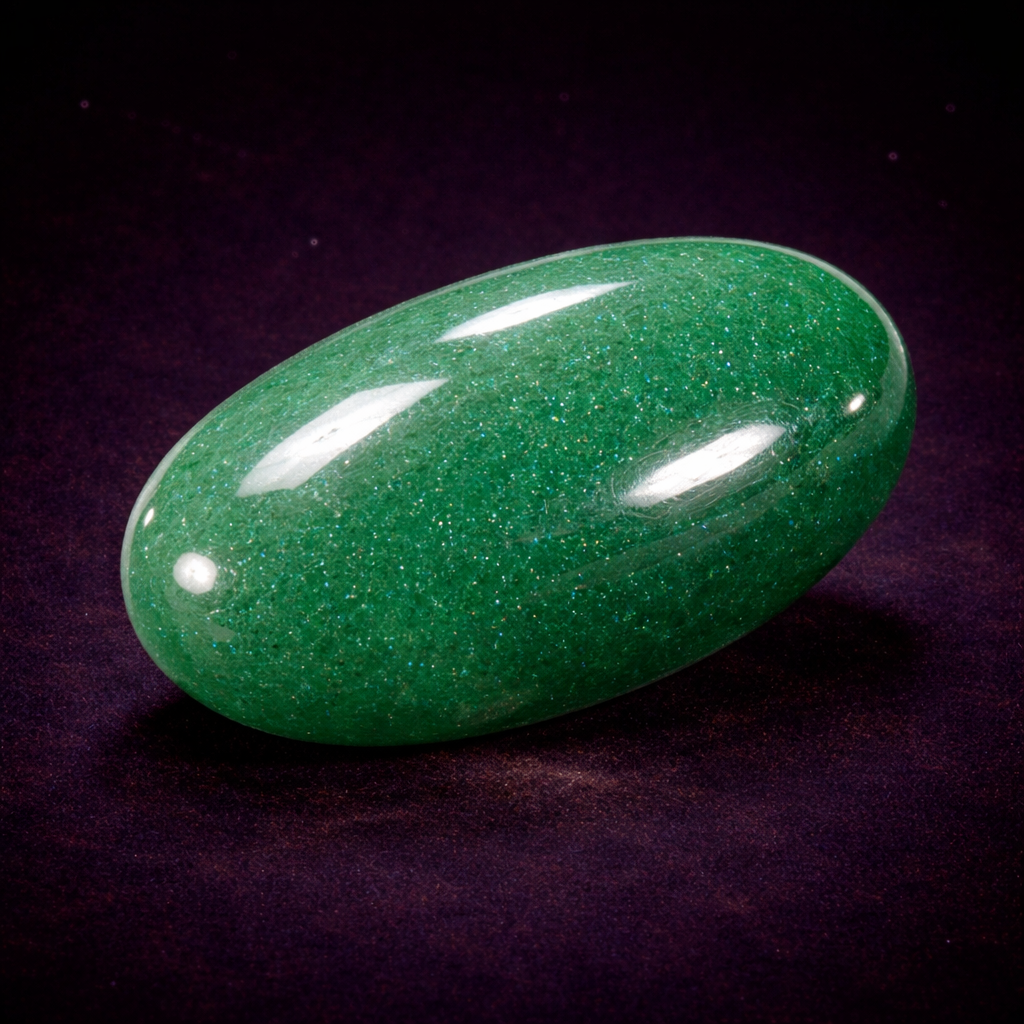
Aventurine is a variety of quartz characterized by 'aventurescence' – a sparkling optical effect caused by reflective mineral inclusions (fuchsite mica for green, hematite or goethite for red/orange). Green aventurine is by far the most common. The name comes from the Italian a ventura, meaning 'by chance', as glittery Venetian glass was discovered accidentally.
Green Aventurine Meaning & Healing Properties
Known as the 'stone of opportunity' and 'the gambler's stone', green aventurine is considered the luckiest of all crystals. It aligns conditions to manifest wealth, good fortune, and new possibilities. It soothes anxiety, stabilizes the mind during change, and promotes decisiveness and leadership. Said to attract winning outcomes in competitive situations.
How to Use Green Aventurine
- Attracting luck and good fortune
- Job interviews and competitions
- New opportunities and ventures
- Calming anxiety before big moments
- Heart chakra opening
Green Aventurine Facts
- Often called 'the gambler's stone' – many gamblers carry it for luck
- The name comes from Venetian glass accidentally created with copper flecks – 'vetro avventurina'
- Aventurine comes in many colours but green is by far the most popular
- It is sometimes called 'Indian jade' though it is not jade at all
How to Cleanse and Charge Green Aventurine
Green aventurine is a quartz shot through with platelets of fuchsite mica, which produce its characteristic sparkle. At 6.5 to 7 it takes a brief rinse in cool water without any problem. Sunlight is the limitation: the green comes from the mica inclusions and pales with prolonged ultraviolet exposure, so keep it off bright windowsills and charge it by moonlight instead. Avoid abrasives, which flatten the polish and dull the shimmer. It is tough enough to carry loose, which is why it is such a common pocket stone.
How to Spot Fake Green Aventurine
The main confusion is with goldstone, a man-made glass containing suspended copper flecks — despite being sold in every crystal shop, goldstone is entirely synthetic and was never a mineral. The distinction is in the sparkle: aventurine's shimmer comes from flat mica platelets scattered irregularly through a cloudy, translucent green body, and it appears and disappears as you turn the stone. Goldstone glitters densely and evenly from a clear, glassy body, with the flecks distributed far too uniformly. Dyed quartzite is also sold as aventurine and shows colour pooling in cracks.
What to Pair Green Aventurine With
Aventurine is the traditional stone of opportunity and good fortune, so it pairs naturally with citrine for prosperity and with jade for steadier, longer-term luck. Rose quartz extends it towards the heart, and the two are often combined for emotional recovery, since aventurine is also used for calming anxiety. Clear quartz amplifies it. It is a common travelling and interview stone precisely because it is hard-wearing.
Questions People Ask About Green Aventurine
Can aventurine go in water?
Yes, briefly. It is a quartz and hard enough to rinse in cool water. Skip long salt-water soaks.
What is the difference between aventurine and goldstone?
Goldstone is man-made glass with copper flecks — it has never been a natural mineral. Aventurine is genuine quartz with mica inclusions, cloudier in body and irregular in its sparkle.
Does aventurine fade?
Yes, in sunlight. The green comes from mica inclusions that pale with prolonged ultraviolet exposure, so charge it by moonlight rather than on a windowsill.
What is green aventurine used for?
Traditionally for luck, opportunity and calming anxiety — often carried before interviews, exams or anything with an uncertain outcome.
Where to get Green Aventurine
If you want to work with Green Aventurine as a physical stone, here are three forms commonly used.
As an Amazon Associate, we earn from qualifying purchases.