Origins & Geology
Found in: China, Mexico, South Africa, USA, UK
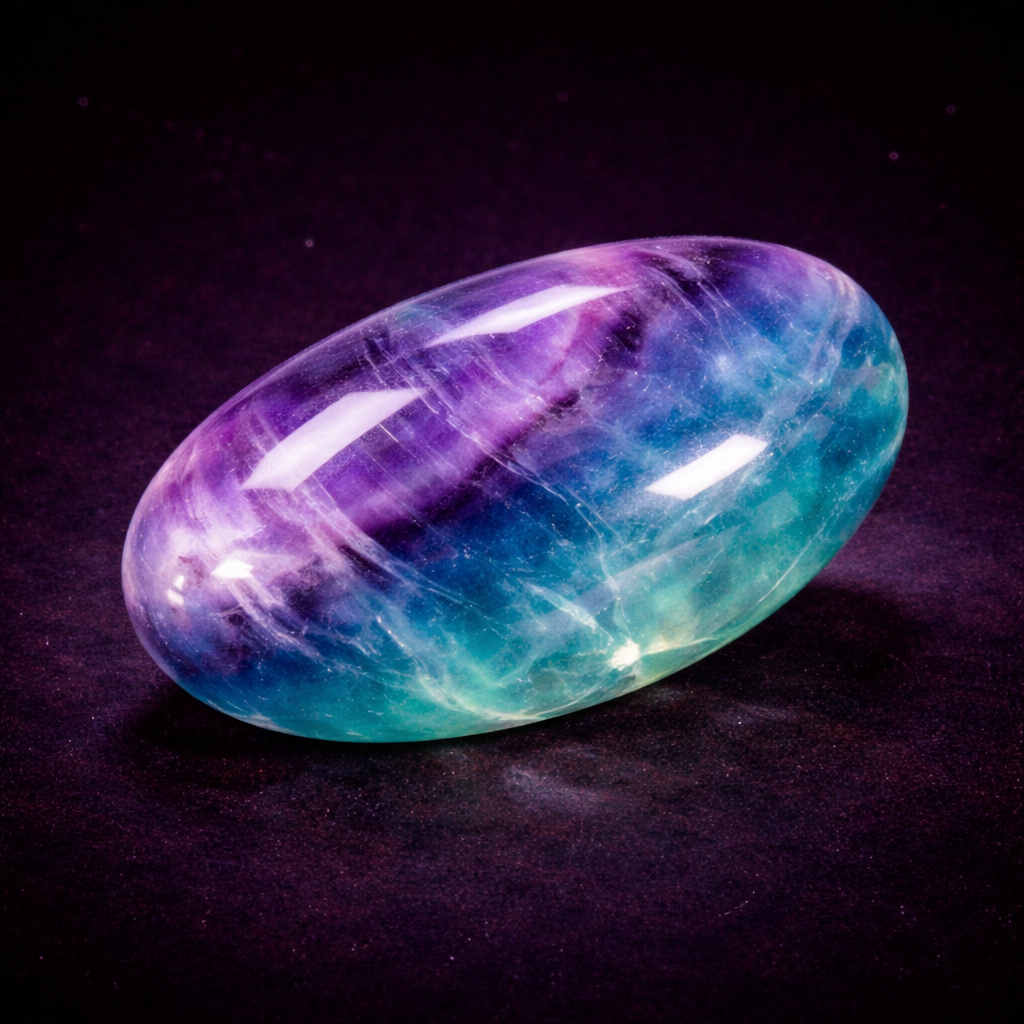
Fluorite is calcium fluoride, crystallizing in perfect cubes and octahedra in a rainbow of colors – purple, green, blue, yellow, and clear – often zoned within a single crystal. It is fluorescent under UV light (the word 'fluorescence' is derived from fluorite). Used industrially as a flux in steel production. Rainbow fluorite shows multiple color bands in a single specimen.
Fluorite Meaning & Healing Properties
Called the 'genius stone' and 'the most colorful mineral in the world', fluorite is prized for enhancing focus, mental clarity, and learning. It absorbs and neutralizes negative energy and stress, making it ideal for study spaces. Each color carries unique properties: purple for intuition, green for the heart, blue for communication, clear for clarity.
How to Use Fluorite
- Improving focus and study
- Clearing mental clutter
- Absorbing electromagnetic stress
- Each colour for specific chakra work
- Bringing order to chaos
Fluorite Facts
- The word 'fluorescence' was coined from fluorite, which glows under UV light
- Fluorite forms the most perfect cubic crystals in the mineral kingdom
- China produces the majority of the world's fluorite
- It is one of the most collectible minerals due to its extraordinary colour variety
How to Cleanse and Charge Fluorite
Fluorite is beautiful and genuinely delicate. At 4 on the Mohs scale it scratches easily, and it has perfect octahedral cleavage in four directions, which means a knock can split it cleanly along an internal plane. It is also among the most light-sensitive stones there is — the purples and greens fade markedly in sunlight, and some material changes noticeably within weeks on a bright windowsill. Rinse briefly in cool water at most, never soak it, keep salt away, store it apart from harder stones, and charge it by moonlight or sound.
How to Spot Fake Fluorite
Glass is the usual imitation, often moulded into spheres and towers with swirled colour. Real fluorite shows colour in distinct bands or zones that follow the crystal's internal geometry, frequently in straight-edged sections rather than soft swirls, and natural octahedral pieces have flat cleavage faces that meet at consistent angles. Glass shows round bubbles, warms fast in the hand, and its colour tends to swirl in a way no crystal structure would produce. Fluorite is also soft enough that a steel blade will scratch it, which glass often resists.
What to Pair Fluorite With
Fluorite is associated with mental order — sorting, studying, clearing confusion — so it pairs naturally with clear quartz for focus and with amethyst for a calmer, more meditative version of the same. Sodalite covers similar analytical territory. Because fluorite is soft, it is one of the stones most often kept on a desk rather than carried, and it should not share a pouch with quartz, which will scratch it.
Questions People Ask About Fluorite
Can fluorite go in water?
Only briefly, and preferably not at all. It is soft, has perfect cleavage in four directions, and long exposure to water can dull the surface and work into the cleavage planes.
Why is my fluorite losing colour?
Sunlight. Fluorite is one of the most light-sensitive stones commonly sold, and purple and green material fades quickly and permanently on a bright windowsill.
Is my fluorite actually glass?
Look for banded or zoned colour following straight internal geometry, and flat cleavage faces. Swirled colour, round bubbles and a stone that resists scratching all suggest glass — real fluorite is soft enough to scratch with a steel blade.
What is fluorite used for?
Traditionally for concentration, study and mental clarity — it is the stone people keep on a desk rather than by the bed.
Where to get Fluorite
If you want to work with Fluorite as a physical stone, here are three forms commonly used.
As an Amazon Associate, we earn from qualifying purchases.