Origins & Geology
Found in: Democratic Republic of Congo, Zambia, Russia, Australia
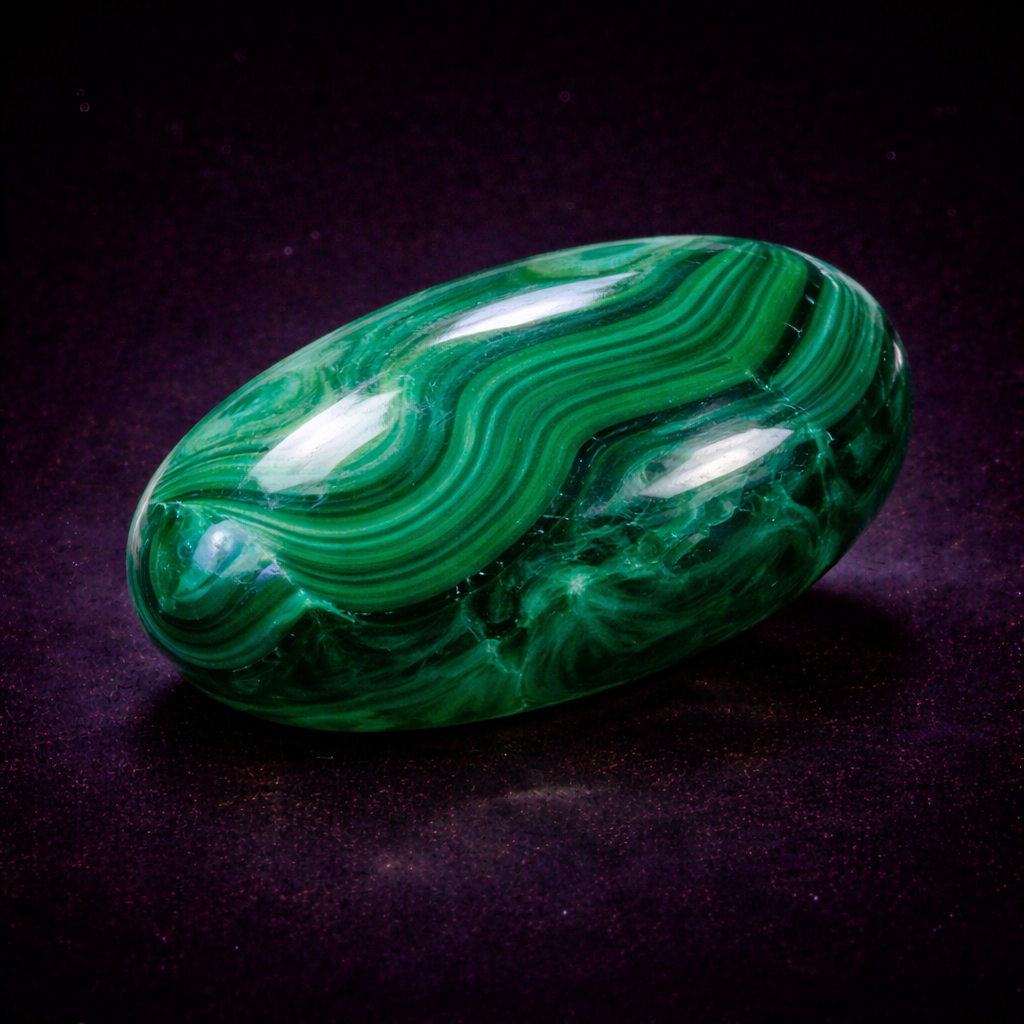
Malachite is a copper carbonate hydroxide mineral with a vivid green color and distinctive banded patterns. It forms as a secondary mineral in the oxidized zones of copper ore deposits. Ancient Egyptians mined it in the Sinai Peninsula from as early as 4000 BCE. Its rich green and swirling patterns make it one of the most visually striking minerals.
Malachite Meaning & Healing Properties
Known as the 'stone of transformation', malachite amplifies both positive and negative energies – it should be used with clear intention. It is a powerful cleanser of emotional pain, drawing out suppressed trauma and fear from the body. Associated with protection during travel and childbirth, and with abundance and business success.
How to Use Malachite
- Deep emotional healing and release
- Transformation and personal growth
- Protection during travel
- Attracting abundance
- Clearing blocked energy
Malachite Facts
- Malachite raw powder is toxic – always wash hands after handling raw specimens
- Ancient Egyptians used malachite as eyeshadow as early as 4000 BCE
- The Hall of Malachite in the Hermitage Museum, St. Petersburg, features extraordinary malachite columns
- It is one of the first ores used to smelt copper – as early as 4000 BCE
How to Cleanse and Charge Malachite
Malachite needs more caution than any other stone on this site. It is a copper carbonate, soft at 3.5 to 4, and it reacts with water and acids — a rinse can pit and dull the surface, and prolonged damp will damage it. More importantly, copper carbonate is toxic if ingested or inhaled: never make a direct crystal elixir with malachite, do not put it in drinking water, avoid breathing the dust from raw or broken pieces, and wash your hands after handling unpolished specimens. Polished, sealed malachite is safe to hold. Clean it with a dry cloth, keep it out of sunlight, which fades the green, and charge it with moonlight or sound.
How to Spot Fake Malachite
Reconstituted and resin malachite is extremely common. Genuine malachite has irregular concentric banding in many tones of green, with bands of varying width that never repeat exactly and often form imperfect eyes and swirls. Fakes made from resin or polymer show banding that is too regular, sometimes visibly repeating, and the pattern may not continue logically around the edges of the piece. Real malachite is noticeably heavy and cold for its size; resin feels light and warms quickly. A pin heated and touched to an inconspicuous spot will smell of plastic on a fake, though this obviously damages the piece.
What to Pair Malachite With
Malachite is usually described as an amplifier of whatever is already present, so it is often paired with something stabilising. Black tourmaline or hematite ground it. With rose quartz it moves towards heart healing and is gentler to work with. Chrysocolla is its traditional partner and the two frequently grow together in the same copper deposits, which makes them a natural, visually striking pairing. Many people avoid combining malachite with other intense stones such as moldavite.
Questions People Ask About Malachite
Is malachite toxic?
In its raw form, yes, if ingested or inhaled. It is a copper carbonate, so never make a direct elixir with it, do not use it in drinking water, avoid breathing dust from raw or broken pieces, and wash your hands after handling unpolished specimens. Polished, sealed pieces are safe to hold.
Can malachite go in water?
No. It is soft and reacts with water and acids, so rinsing pits and dulls the surface — and the copper content makes malachite water unsafe to drink.
How can I spot fake malachite?
Look at the banding. Real malachite has irregular concentric bands of varying width that never repeat exactly. Resin fakes show regular, sometimes repeating patterns, feel light and warm up quickly in the hand.
What is malachite used for?
Traditionally for transformation, protection and drawing out what has been suppressed. It has a reputation for intensifying emotions rather than soothing them.
Where to get Malachite
If you want to work with Malachite as a physical stone, here are three forms commonly used.
As an Amazon Associate, we earn from qualifying purchases.