Origins & Geology
Found in: Mexico, USA (Oregon, Idaho), Iceland, Japan
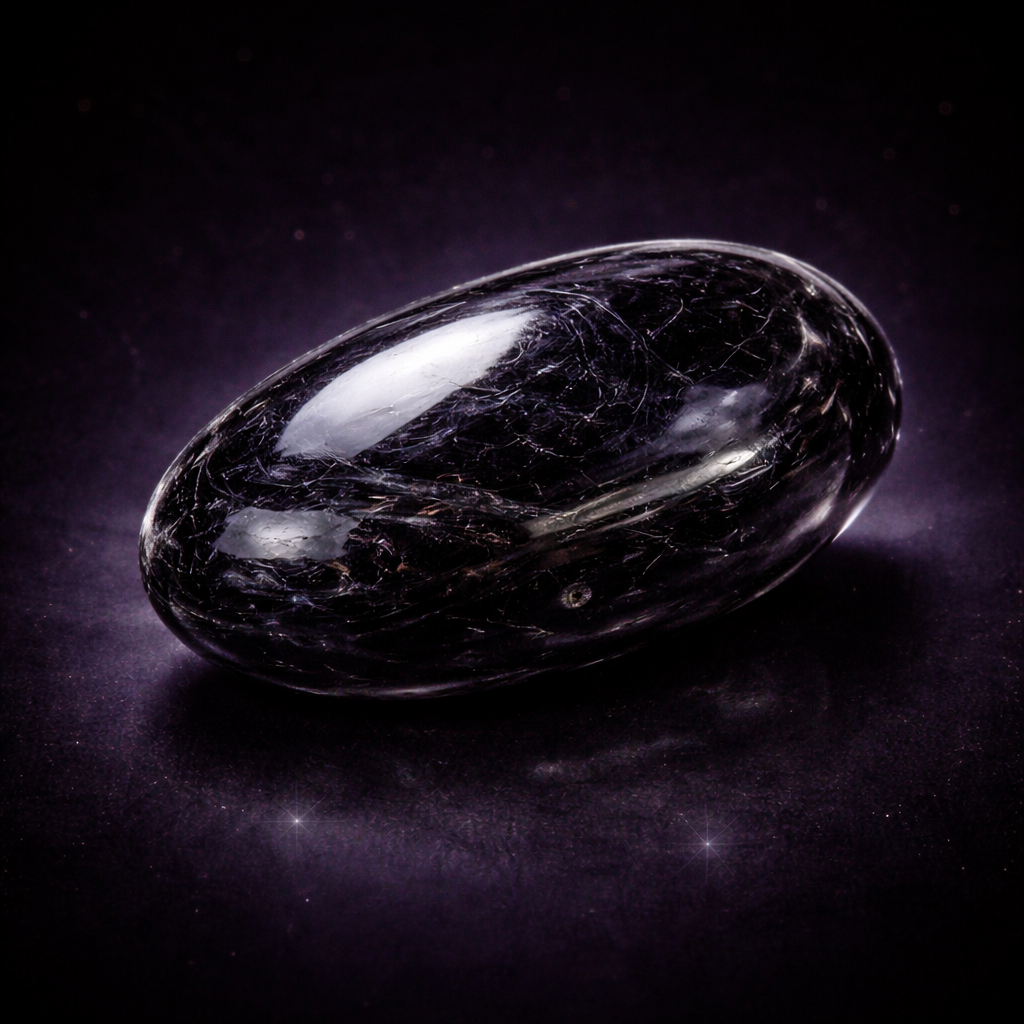
Obsidian is volcanic glass formed when lava cools rapidly with minimal crystal growth. Its glassy fracture produces edges sharper than surgical steel – ancient peoples used it for cutting tools, arrowheads, and mirrors. Black obsidian owes its color to magnetite nanoparticles. Varieties include snowflake, rainbow, and mahogany obsidian.
Obsidian Meaning & Healing Properties
A powerful grounding and protective stone, obsidian is known as the 'truth-teller'. It reflects the inner self without mercy or flattery, revealing hidden fears, traumas, and self-deceptions so they can be cleared. Ancient Mesoamerican shamans used obsidian mirrors for scrying. It absorbs and transforms negative energy.
How to Use Obsidian
- Grounding and earthing
- Shadow work and self-reflection
- Protection against negativity
- Cutting energetic cords
- Shamanic and scrying practices
Obsidian Facts
- Obsidian blades can be sharper than the finest surgical steel
- Ancient Aztec and Maya priests used obsidian mirrors for divination
- The largest known obsidian deposit is in Oregon, USA
- Obsidian is not a true mineral – it is amorphous volcanic glass
How to Cleanse and Charge Obsidian
Obsidian is volcanic glass and water does not affect it, so rinsing is entirely safe. What it does not tolerate is impact: glass has no crystal structure to absorb a knock, and a dropped piece will chip or shear, often leaving an edge sharp enough to cut. Handle raw and knapped pieces carefully. Salt and abrasives will slowly dull the mirror polish that gives obsidian its scrying quality, so clean it with water and a soft cloth and charge it with moonlight, sound or earth rather than anything gritty.
How to Spot Fake Obsidian
Because obsidian is itself a glass, the line between real and fake is unusually blurred — the common imitation is man-made slag glass or moulded black glass sold as natural obsidian. Look for a conchoidal fracture, the curved, shell-like breakage pattern natural obsidian shows, and for slight internal variation. Moulded glass tends to have a seam, perfectly uniform colour, and round bubbles. Be more sceptical about the coloured varieties: some rainbow and blue obsidian on the market is dyed or entirely synthetic, while genuine rainbow sheen appears only at certain angles under a directional light.
What to Pair Obsidian With
Obsidian is a grounding anchor, which makes it the natural partner for stones that lift or accelerate. It steadies moldavite, tempers labradorite and gives amethyst a floor to stand on. With black tourmaline it makes a straightforwardly protective pairing many people keep by the front door. For shadow work it is often used with rose quartz, on the principle that what obsidian brings up needs somewhere soft to land.
Questions People Ask About Obsidian
Can obsidian go in water?
Yes. It is volcanic glass and chemically stable, so rinsing causes no damage. Just avoid dropping it while wet — obsidian chips easily and the broken edges are genuinely sharp.
Why is obsidian called the truth-teller?
Because it is traditionally used to surface what is being avoided rather than to soothe. Mesoamerican priests used polished obsidian mirrors for scrying, and the stone keeps that association with unflattering self-reflection.
Is obsidian a crystal?
Not technically. It cooled too fast for crystals to form, so it is an amorphous natural glass rather than a mineral with a crystal structure.
Is black obsidian too intense to sleep with?
Some people find it brings up vivid or difficult dreams. If that happens, work with it during the day and keep something gentler by the bed.
Where to get Obsidian
If you want to work with Obsidian as a physical stone, here are three forms commonly used.
As an Amazon Associate, we earn from qualifying purchases.