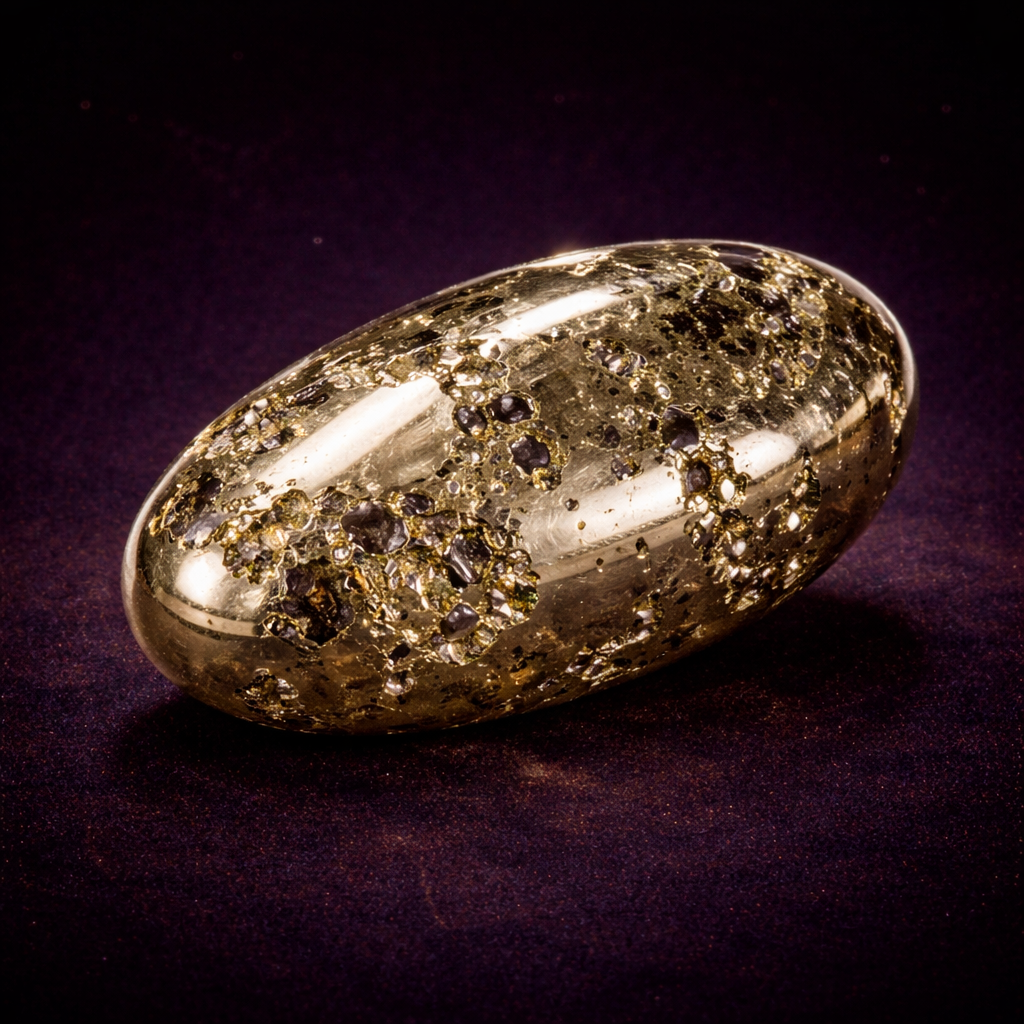
Origins & Geology
Found in: Spain, Peru, USA, Russia, South Africa
Pyrite is iron sulfide, forming perfect brass-yellow cubic crystals that have fooled many into thinking they had found gold – hence the name 'fool's gold'. Despite the nickname, pyrite has genuine industrial value as a source of sulfur. It forms in a variety of geological environments, and the Spanish Iberian Pyrite Belt is one of the world's largest deposits.
Pyrite Meaning & Healing Properties
Pyrite is the ultimate stone of wealth, manifestation, and willpower. Its golden luster mirrors the energy of the sun and gold, attracting abundance, good luck, and prosperity. It creates a shield against negative energy, pollution, and manipulation. Pyrite strengthens the solar plexus and is said to help one take decisive action toward goals.
How to Use Pyrite
- Attracting wealth and financial abundance
- Shielding against manipulation
- Boosting willpower and decisiveness
- Manifesting goals into reality
- Protection against environmental pollutants
Pyrite Facts
- Pyrite was used as a source of sparks for starting fires in the Paleolithic era
- The Spanish Iberian Pyrite Belt is one of Earth's largest mineral deposits
- Fool's Gold has fooled many gold prospectors throughout history
- Pyrite crystals are among the most geometrically perfect in nature – forming exact cubes and pyritohedra
How to Cleanse and Charge Pyrite
Pyrite is iron sulfide, and water is genuinely bad for it. Moisture triggers oxidation that rusts the metallic surface, and in humid conditions specimens can develop what collectors call pyrite disease — a progressive breakdown that produces sulfuric acid, powders the crystal and can damage whatever it is stored with. Never rinse it, never use salt, and keep it out of bathrooms and damp rooms. Clean it with a dry brush, store it somewhere dry, and if you keep a collection, do not let a deteriorating specimen sit beside healthy ones.
How to Spot Fake Pyrite
Pyrite is inexpensive enough that faking it is rarely worthwhile, so the confusion usually runs the other way — pyrite being mistaken for gold, which is where the name fool's gold comes from. The distinction is straightforward: pyrite forms sharp cubes and pyritohedra with striations across the faces, is brittle and shatters when struck, and leaves a greenish-black streak. Gold is soft, malleable, forms no cubes, and leaves a golden streak. Chalcopyrite, a brassier copper iron sulfide often artificially treated into iridescent peacock ore, is sometimes sold under the pyrite name.
What to Pair Pyrite With
Pyrite is the stone of practical wealth and confident action, which puts it alongside citrine for money work and tiger's eye for follow-through. Black tourmaline pairs with it for protection in a work setting. Keep it away from stones you cleanse with water, simply for storage reasons — anything damp beside pyrite is asking for corrosion.
Questions People Ask About Pyrite
Can pyrite go in water?
No. Pyrite is iron sulfide and moisture rusts it. Prolonged damp can trigger pyrite disease, a breakdown that produces sulfuric acid and can destroy the specimen.
Why is my pyrite turning dull and powdery?
Oxidation from humidity. Move it somewhere dry immediately, keep it away from other specimens, and clean it only with a dry brush.
How is pyrite different from gold?
Pyrite forms striated cubes, is brittle and shatters when struck, and leaves a greenish-black streak. Gold is soft and malleable, forms no cubes, and streaks gold.
What is pyrite used for?
Traditionally for prosperity, willpower and protection in work and business. It is one of the stones most often kept on a desk or in a cash box.
Where to get Pyrite
If you want to work with Pyrite as a physical stone, here are three forms commonly used.
As an Amazon Associate, we earn from qualifying purchases.