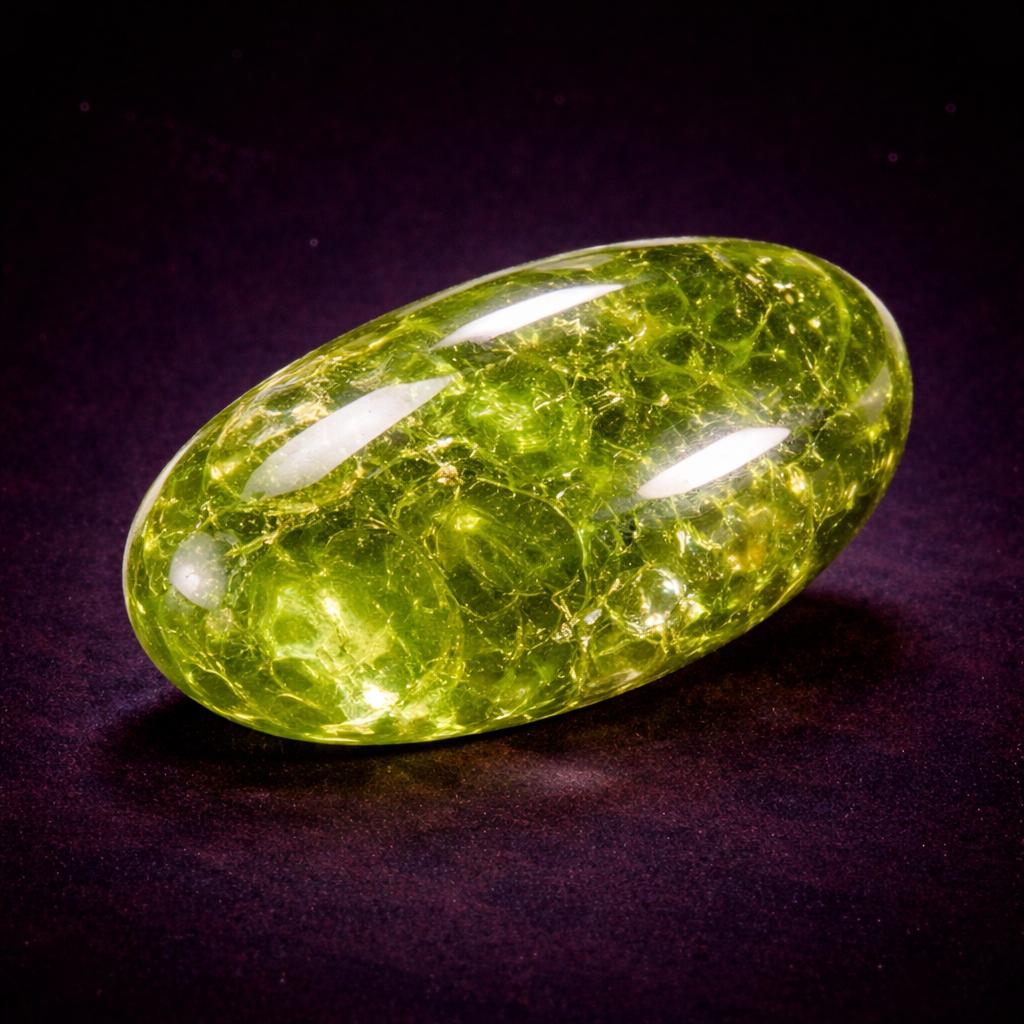
Origins & Geology
Found in: Egypt (Zabargad Island), Pakistan, Myanmar, USA (Arizona)
Peridot is the gem-quality variety of the mineral olivine (magnesium iron silicate), one of the most abundant minerals in the Earth's mantle. Unusually, it is also found in meteorites and has been brought to the surface by volcanic activity. Ancient Egyptians mined it on Zabargad (St. John's Island) in the Red Sea for over 3,500 years, calling it the 'gem of the sun'.
Peridot Meaning & Healing Properties
One of the oldest known gemstones, peridot has been valued since ancient Egypt as a stone of light and protection. It is said to access the frequency of increase – enhancing health, abundance, and growth in all areas of life. It detoxifies negative emotions, resolves jealousy, and opens the heart to giving and receiving generously.
How to Use Peridot
- Releasing jealousy and resentment
- Attracting abundance and growth
- Healing the heart and gut
- Clearing toxic emotions
- New beginnings after difficulty
Peridot Facts
- August birthstone alongside Spinel
- Peridot is one of very few gemstones found in only one colour
- It has been found in meteorites – some peridot is literally extraterrestrial
- Ancient Egyptians mined it on Zabargad Island for over 3,500 years – calling it 'the gem of the sun'
How to Cleanse and Charge Peridot
Peridot is olivine, reasonably hard at 6.5 to 7, and a brief rinse in cool water is fine. It has two specific sensitivities worth knowing: it reacts to acids, so keep it away from anything acidic including some cleaning products, and it is prone to thermal shock, meaning a sudden change from hot to cold can fracture it. Never use an ultrasonic or steam cleaner. Many peridots carry internal inclusions that make these risks more real than they sound. Sunlight is harmless; salt is not worth the risk.
How to Spot Fake Peridot
Green glass is the usual imitation, and peridot has an unusually good tell against it. Peridot is strongly doubly refractive, which means that looking down through the table of a faceted stone you can often see the back facet edges appear doubled, as if slightly out of register — glass, being singly refractive, never does this. Peridot also has a distinctive oily or greasy lustre rather than a crisp glassy one, and a yellowish-green tone that stays consistent. Synthetic and glass fakes tend to be a purer, more emerald green with round bubbles under magnification.
What to Pair Peridot With
Peridot is associated with renewal, released resentment and openness after a difficult period, which puts it close to rhodonite in purpose while feeling considerably lighter. It pairs well with citrine for optimism and momentum, with rose quartz for heart work, and with clear quartz for amplification. Its warm, sunny character makes it a natural counterweight to the cooler blue stones.
Questions People Ask About Peridot
Can peridot go in water?
Briefly, yes. Avoid acids, ultrasonic and steam cleaners, and sudden temperature changes, since peridot is vulnerable to thermal shock and often internally included.
How can I tell peridot from green glass?
Look down through the stone for doubled back-facet edges — peridot is strongly doubly refractive and glass is not. Peridot also has an oily rather than glassy lustre and a yellowish-green tone.
Is peridot the same as olivine?
Peridot is the gem-quality variety of the mineral olivine. Same mineral, different name once it is clear and cuttable.
What is peridot used for?
Traditionally for renewal, letting go of resentment and opening up after a difficult period. It is August's birthstone.
Where to get Peridot
If you want to work with Peridot as a physical stone, here are three forms commonly used.
As an Amazon Associate, we earn from qualifying purchases.