Origins & Geology
Found in: South Africa, China, Australia, Germany, Scotland
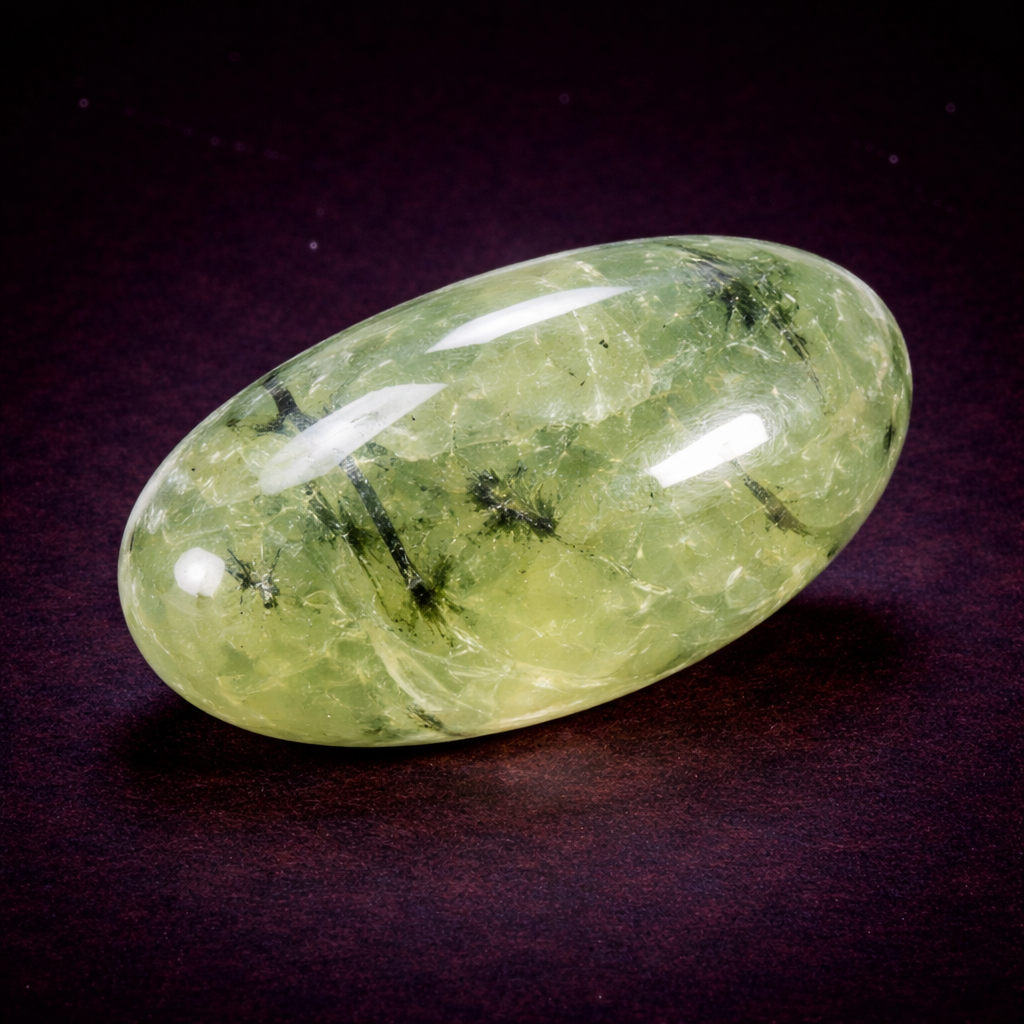
Prehnite is a calcium aluminum silicate mineral, typically pale green to yellow-green, often translucent with a waxy luster. It was the first mineral to be named after a person – Dutch colonel Hendrik von Prehn, who brought specimens from South Africa to Europe in the 1780s. It forms in low-grade metamorphic rocks and in the vesicles of volcanic basalt.
Prehnite Meaning & Healing Properties
Known as the 'stone of prophecy' and 'the healer's healer', prehnite enhances precognition, clairvoyance, and the ability to attune to divine guidance. It is said that Australian Aboriginal shamans used it to enhance their visionary practices. Prehnite declutters the mind, helps one live in the present moment, and strengthens the connection between the heart and the will.
How to Use Prehnite
- Developing precognition and foresight
- Living in the present moment
- Healing work and energy healing
- Connecting heart and will
- Decluttering mental and physical spaces
Prehnite Facts
- Prehnite was the first mineral ever named after a person – Colonel Hendrik von Prehn
- Australian Aboriginal shamans traditionally used prehnite for visionary practices
- It is sometimes called 'grape jade' in China due to its botryoidal (grape-cluster) habit
- South Africa – where it was first discovered – remains one of the finest sources
How to Cleanse and Charge Prehnite
Prehnite is a calcium aluminium silicate, reasonably hard at 6 to 6.5, but it forms in botryoidal, grape-like masses with a radiating fibrous structure inside, and that structure can flake or split along the fibres if the stone is knocked or soaked. Rinse briefly rather than soaking, dry it properly, and avoid salt, which dulls the soft waxy lustre that makes prehnite recognisable. Prolonged sunlight can pale the yellow-green. Pieces containing black epidote needles need extra care, since the needles sit along natural weaknesses.
How to Spot Fake Prehnite
Green glass and dyed quartz appear under the prehnite name, usually in tumbled or spherical form. Genuine prehnite is translucent with a distinctly waxy to slightly greasy lustre rather than a glassy shine, and holding it to a light reveals a faint internal fibrous radiating structure, sometimes described as looking like frozen light. The colour is a soft, slightly cloudy yellow-green that varies within a single piece. Many genuine specimens also contain fine dark green or black epidote needles, which are difficult to imitate convincingly.
What to Pair Prehnite With
Prehnite is associated with calm foresight and with releasing the need to hold everything together, which makes it a natural partner for amethyst in meditation and for rose quartz in emotional work. It is often combined with green aventurine, since both are gentle green heart-adjacent stones. Epidote-included prehnite is usually worked with on its own, as the combination is already considered a fairly active one.
Questions People Ask About Prehnite
Can prehnite go in water?
Briefly. Its radiating fibrous internal structure can split or flake if soaked, so a quick rinse and thorough drying is the safe approach.
What are the black needles in prehnite?
Epidote, a mineral that commonly grows alongside prehnite. Specimens containing it are prized, though the needles sit along natural weak points and make the piece slightly more fragile.
How do I know my prehnite is real?
Look for a waxy rather than glassy lustre, a soft cloudy yellow-green that varies across the piece, and a faint radiating fibrous structure when held to a light.
What is prehnite used for?
Traditionally for calm foresight, decluttering and letting go of the need to control outcomes. It is sometimes called the stone of unconditional love directed at oneself.
Where to get Prehnite
If you want to work with Prehnite as a physical stone, here are three forms commonly used.
As an Amazon Associate, we earn from qualifying purchases.