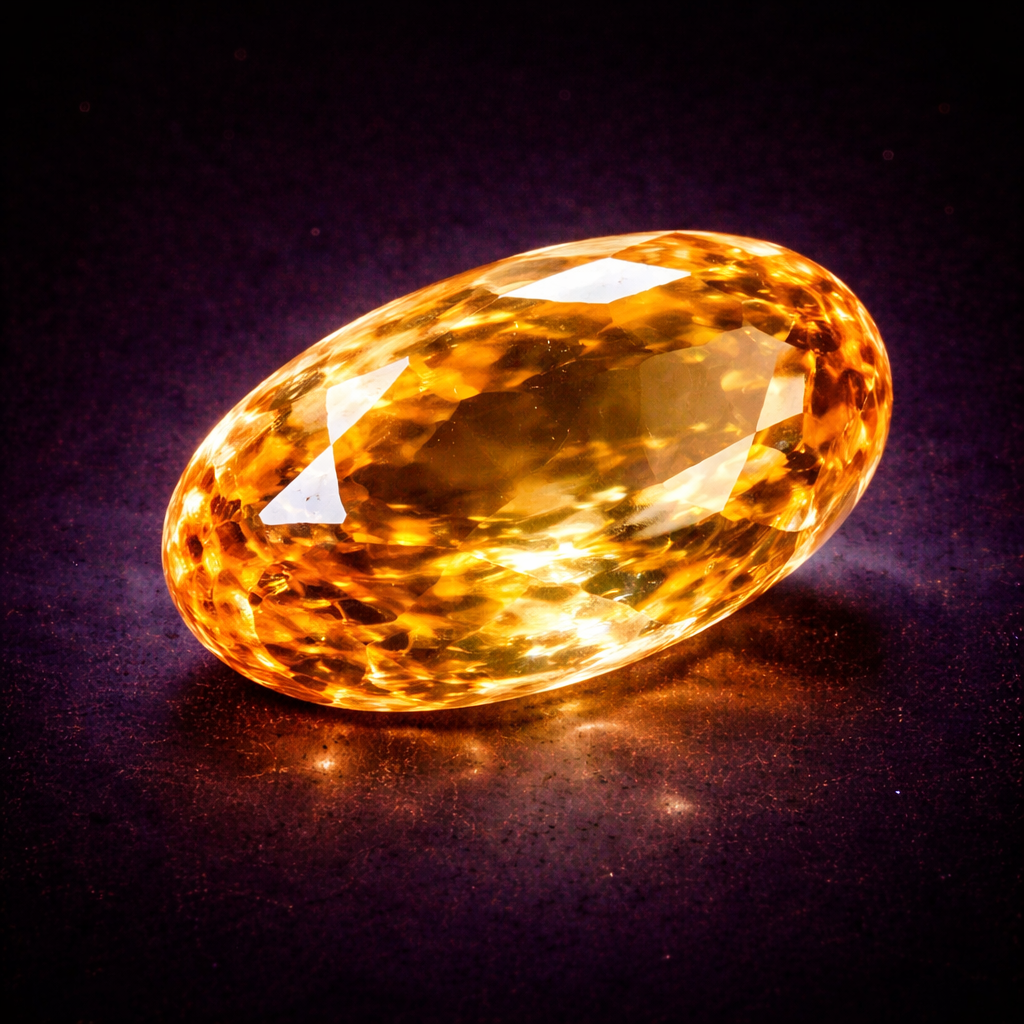
Origins & Geology
Found in: Brazil, Bolivia, Spain, Russia, France
Citrine is a yellow to orange variety of quartz, colored by traces of iron. Natural citrine is relatively rare – most commercial citrine is heat-treated amethyst or smoky quartz. True natural citrine forms in hydrothermal veins and granitic pegmatites. Its name derives from the Latin citrina, meaning 'yellow'.
Citrine Meaning & Healing Properties
Known as the 'merchant's stone' and 'stone of abundance', citrine never needs cleansing as it does not accumulate negative energy. It radiates positivity, creativity, and personal power. Historically placed in cash registers and wealth corners to attract prosperity. It activates the solar plexus, boosting self-confidence and motivation.
How to Use Citrine
- Attracting wealth and abundance
- Boosting confidence and motivation
- Stimulating creativity
- Manifesting goals and desires
- Energising and uplifting mood
Citrine Facts
- Most commercial citrine is heat-treated amethyst – natural citrine has a paler, more uniform colour
- One of only two minerals that never needs energetic cleansing (the other is kyanite)
- Scottish jewellery using citrine dates to the 17th century
- November birthstone alongside Topaz
How to Cleanse and Charge Citrine
Citrine is quartz and takes a brief rinse in cool water without any difficulty. Sunlight is the thing to avoid: both natural citrine and the heat-treated amethyst sold as citrine will pale under prolonged ultraviolet light, and heat-treated material can shift colour noticeably faster. Charge it by moonlight, with sound, or on dry salt. Because citrine is often set in jewellery and worn daily, the more common damage is simple abrasion — store it apart from harder stones and it will keep its polish for years.
How to Spot Fake Citrine
Almost all citrine sold today is heat-treated amethyst, and that is worth understanding rather than fearing — it is still quartz, just not naturally yellow. You can usually tell: treated material has a strongly saturated orange or reddish-amber tone concentrated near the crystal tips, with a whitish or clear base where the heat drove the colour out, and clusters often show a distinctly burnt look. Natural citrine is a much paler, smokier, more even lemon to honey yellow. Beyond treatment, glass imitations occur and give themselves away with round bubbles and a warmth in the hand that quartz does not have.
What to Pair Citrine With
Citrine is the stone people reach for around work, money and momentum, so it pairs naturally with tiger's eye for follow-through and with pyrite for anything commercial. Green aventurine is the traditional partner for opportunity and luck. Amethyst makes an interesting counterweight — same mineral, opposite temperament — and the two together are sold as ametrine when they occur in a single crystal. If citrine makes you restless, ground it with black tourmaline or hematite.
Questions People Ask About Citrine
Is my citrine natural or heat-treated amethyst?
Look at the colour. Heat-treated amethyst is a deep orange or amber concentrated at the tips with a white or clear base, and often looks slightly burnt. Natural citrine is a paler, smokier, more evenly distributed lemon to honey yellow. The treated material is far more common.
Can citrine go in water?
Yes, briefly. It is quartz and hard enough to rinse in cool water. Skip long salt-water soaks.
Why has my citrine faded?
Sunlight. Both natural and heat-treated citrine lose colour under prolonged ultraviolet light, and treated material can fade noticeably faster. The change does not reverse.
What is citrine used for?
It is traditionally associated with confidence, abundance and creative drive — the stone people keep on a desk or in a till rather than by the bed.
Where to get Citrine
If you want to work with Citrine as a physical stone, here are three forms commonly used.
As an Amazon Associate, we earn from qualifying purchases.