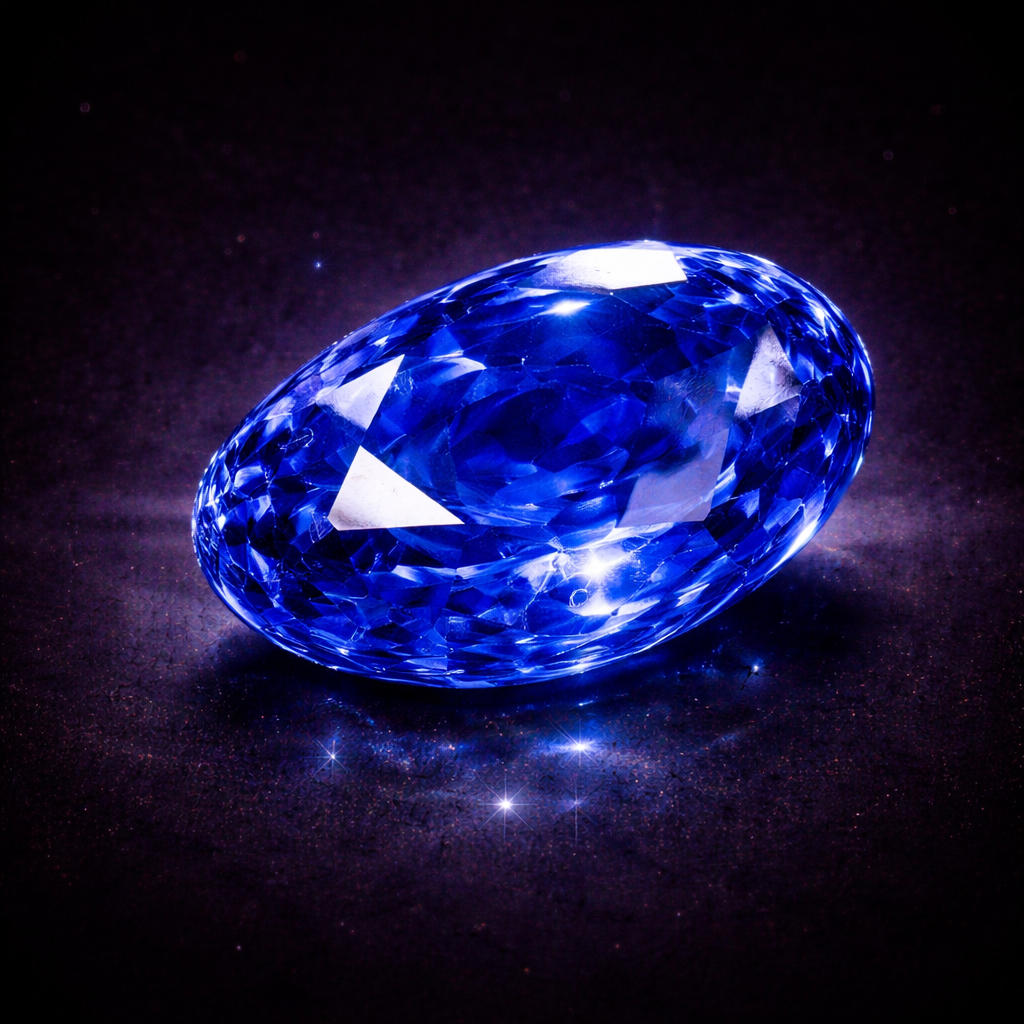
Origins & Geology
Found in: Sri Lanka, Myanmar, Madagascar, Kashmir, Australia
Sapphire is the gem variety of corundum (aluminum oxide), with blue coloration caused by trace amounts of iron and titanium. Second only to diamond in hardness, it forms in metamorphic and igneous rocks. The prized Kashmir sapphire has a velvety 'cornflower blue' due to fine light-scattering inclusions. Non-blue corundum gems are called fancy sapphires.
Sapphire Meaning & Healing Properties
Historically the stone of royalty and divine favor, sapphire symbolizes wisdom, loyalty, and truth. Ancient Persians believed the earth rested on a giant sapphire whose reflection colored the sky. It is used to access deeper levels of consciousness, sharpen intuition, and strengthen integrity. Sapphire is said to attract prosperity and protect against envy.
How to Use Sapphire
- Developing wisdom and mental clarity
- Strengthening integrity and loyalty
- Third eye and psychic development
- Attracting prosperity
- Protection against envy
Sapphire Facts
- September birthstone
- Princess Diana's engagement ring – now worn by Princess Catherine – is a 12-carat blue sapphire
- Ruby and sapphire are the same mineral – corundum
- The 'Star of India' is a 563-carat star sapphire at the American Museum of Natural History
How to Cleanse and Charge Sapphire
Sapphire is corundum, 9 on the Mohs scale and second only to diamond in hardness, which makes it the least demanding stone here. Water, sunlight and salt all leave it unharmed, and it takes a wash with mild soap and a soft brush without complaint. The one caution applies to treated stones: fracture-filled or heat-treated sapphires, which are common in commercial jewellery, can be damaged by ultrasonic cleaners and harsh chemicals. Because sapphire is harder than almost everything else, store it separately — it will scratch your other crystals rather than the reverse.
How to Spot Fake Sapphire
Synthetic sapphire has been produced at scale since the early twentieth century and is chemically identical to natural stone, so it is not fake so much as lab-grown, and it should be priced accordingly. The classic tell under magnification is curved growth lines in flame-fusion synthetics, where natural sapphire shows straight, angular colour zoning and natural inclusions such as fine rutile silk. Glass imitations are cruder: they feel warmer, scratch easily, and often contain bubbles. Blue-dyed quartz and blue spinel are also sold under the sapphire name.
What to Pair Sapphire With
Sapphire is a stone of clear thought and truthful speech, which puts it close to lapis lazuli and sodalite in purpose, though it carries a more formal, disciplined character. With amethyst it leans towards meditation and wisdom; with clear quartz it sharpens. Because it is usually worn as jewellery rather than carried loose, it tends to be paired by intention rather than physically kept alongside other stones.
Questions People Ask About Sapphire
Can sapphire go in water?
Yes. At 9 on the Mohs scale it is extremely hard and chemically stable. Only be careful with fracture-filled or heavily treated stones, which dislike harsh chemicals and ultrasonic cleaners.
Are sapphires only blue?
No. Corundum occurs in almost every colour — pink, yellow, green, orange and colourless. Red corundum is simply called ruby instead.
Is a lab-grown sapphire real?
Chemically, yes — it is the same mineral with the same properties. The difference is origin and price, not authenticity, and a reputable seller will disclose it.
What is sapphire used for?
Traditionally for wisdom, truthful speech and mental discipline. It has a long association with royalty, vows and clergy across several cultures.
Where to get Sapphire
If you want to work with Sapphire as a physical stone, here are three forms commonly used.
As an Amazon Associate, we earn from qualifying purchases.