Origins & Geology
Found in: Brazil, Pakistan, Afghanistan, Russia, USA
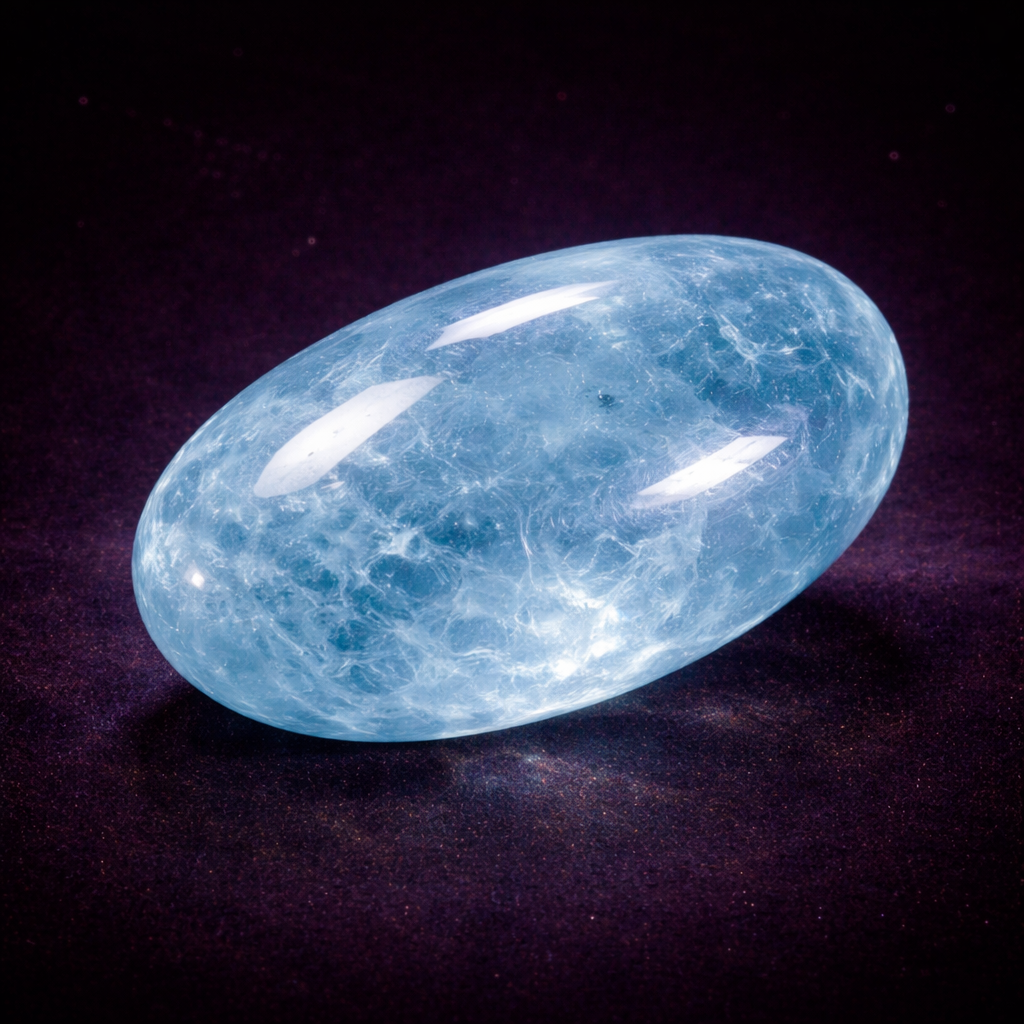
Aquamarine is a blue-green variety of beryl (the same mineral family as emerald), colored by iron impurities. Its name means 'water of the sea' in Latin. Large gem-quality crystals – sometimes over a meter long – have been found in Brazil. It forms in granitic pegmatites and metamorphic rocks, often in hexagonal prismatic crystals.
Aquamarine Meaning & Healing Properties
Sacred to ancient sailors as the 'sailor's stone', aquamarine was believed to calm storms and protect those at sea. It is the stone of courage, clarity, and communication – particularly useful for difficult conversations and public speaking. It soothes anxiety and promotes the release of emotional baggage, encouraging the free flow of truth.
How to Use Aquamarine
- Calming anxiety and fear
- Supporting clear communication
- Protection during travel
- Throat chakra healing
- Releasing emotional baggage
Aquamarine Facts
- March birthstone alongside Bloodstone
- The word aquamarine means 'sea water' in Latin
- Ancient sailors kept aquamarine as protection against drowning
- The largest cut aquamarine is the 'Dom Pedro' at the Smithsonian – 10,363 carats
How to Cleanse and Charge Aquamarine
Aquamarine is a beryl, hard at 7.5 to 8, and water does it no harm despite the name promising more than the mineralogy delivers — a brief rinse is fine. Sunlight is the real enemy: the pale sea-blue comes from trace iron and fades under prolonged ultraviolet light, and heat will do the same. Many aquamarines on the market are already heat-treated to remove a greenish cast, which makes them no more stable. Keep it out of direct sun, avoid salt and ultrasonic cleaners, and charge it by moonlight or with sound.
How to Spot Fake Aquamarine
Blue glass and synthetic spinel are the usual imitations, and both tend to overshoot the colour. Genuine aquamarine is characteristically pale — a soft, slightly greenish sea-blue — so a vivid, saturated blue at a low price is a warning sign. Aquamarine is also dichroic, meaning it shows slightly different colours viewed along different axes, which glass cannot do. Under a loupe, look for the fine parallel tubes and liquid inclusions typical of beryl rather than the round bubbles of glass. Blue topaz is sometimes sold under the aquamarine name and is a genuine stone, just a different one.
What to Pair Aquamarine With
Aquamarine is a throat-chakra stone of calm, clear expression, so it pairs naturally with lapis lazuli and sodalite for communication and with moonstone for anything cyclical or emotional. Amethyst extends it towards meditation. Its character is cooling, which makes it a useful counterweight to the fiery stones — carnelian and citrine — when those feel like too much.
Questions People Ask About Aquamarine
Can aquamarine go in water?
Yes, briefly. It is a hard beryl and a rinse causes no harm. Avoid ultrasonic cleaners and salt, particularly if the stone is heat-treated or included.
Why is my aquamarine so pale?
Because that is what natural aquamarine looks like. Genuine stones are characteristically soft and pale in tone — deep, vivid blue usually means glass, synthetic spinel or blue topaz.
Does aquamarine fade?
Yes, in sunlight. The iron that produces the blue is degraded by prolonged ultraviolet light and heat, and the fading is permanent.
What is aquamarine used for?
Traditionally for calm, clear speech and courage under pressure. It has an old association with sailors and safe passage over water.
Where to get Aquamarine
If you want to work with Aquamarine as a physical stone, here are three forms commonly used.
As an Amazon Associate, we earn from qualifying purchases.