Origins & Geology
Found in: India, Brazil, Egypt, Uruguay, Madagascar
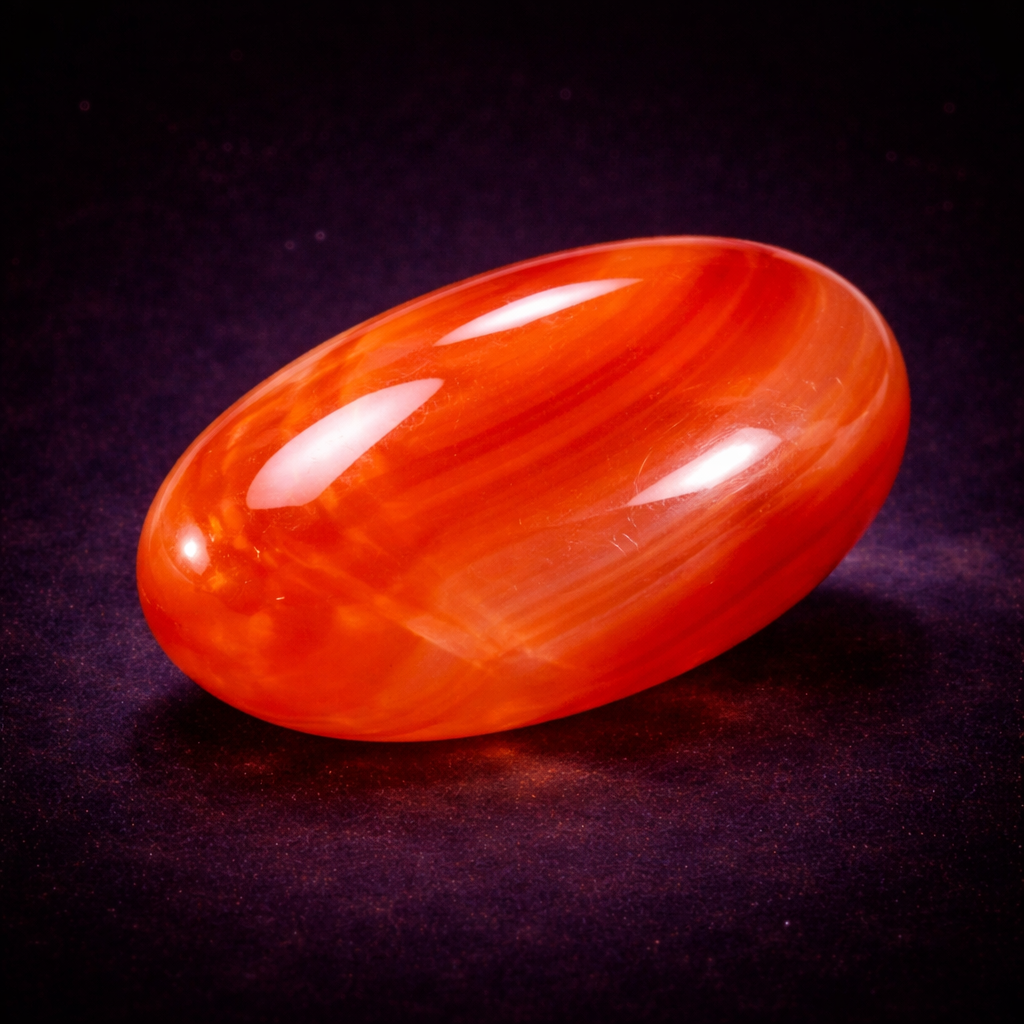
Carnelian is a brownish-red variety of chalcedony (microcrystalline quartz), colored by iron oxide impurities. The color ranges from pale orange to deep red. Ancient Egyptians called it 'the setting sun stone' and used it extensively in jewelry and amulets. Most commercial carnelian is heat-treated agate – natural carnelian shows a cloudy distribution of color.
Carnelian Meaning & Healing Properties
The stone of action, confidence, and creativity, carnelian has been used since ancient times to boost courage and motivation. Egyptian warriors wore it to summon bravery in battle. It is said to attract good luck, stimulate creativity, and dispel apathy. Napoleon wore a carnelian seal on his watch chain throughout his campaigns.
How to Use Carnelian
- Overcoming procrastination and apathy
- Boosting creativity and artistic work
- Courage in public speaking
- Sacral chakra activation
- Attracting success and good luck
Carnelian Facts
- Napoleon wore a carnelian seal on his watch chain throughout all his campaigns
- Ancient Egyptians called carnelian 'the setting sun stone'
- It was one of the most popular stones in ancient Egyptian amulet making
- Prophet Muhammad's seal was set in carnelian
How to Cleanse and Charge Carnelian
Carnelian is a chalcedony, a microcrystalline quartz, and at 6.5 to 7 it handles a brief rinse in cool water easily. Strong sunlight over long periods can pale the orange, so use sun as a short charge rather than a permanent shelf. It is a tough stone with no cleavage, which makes it a good choice for carrying loose in a pocket where softer crystals would chip. Dry salt, moonlight and sound are all safe. A soft cloth keeps the polish bright.
How to Spot Fake Carnelian
Most carnelian on the market is real chalcedony that has been heat-treated or dyed to deepen the orange, and this is so widespread that it is close to standard practice. Hold a piece up to a strong light: naturally coloured carnelian shows a cloudy, uneven distribution of colour, while dyed agate usually reveals the parallel banding of the original stone and a colour that sits too evenly across it. Genuine carnelian is translucent at the edges. Plastic imitations exist at the cheapest end and are obvious by weight and warmth.
What to Pair Carnelian With
Carnelian is a motivation stone and pairs well with citrine for creative work and with tiger's eye for the discipline to finish. Garnet intensifies it. For anyone who finds it makes them scattered, black tourmaline or hematite provide a floor. It sits less easily with the quieter stones — selenite and moonstone tend to feel like they are pulling in the opposite direction.
Questions People Ask About Carnelian
Can carnelian go in water?
Yes, briefly. It is a quartz and hard enough to rinse. Avoid long salt-water soaks.
Is carnelian dyed?
Frequently. Much commercial carnelian is heat-treated or dyed agate. Backlighting usually reveals it — dyed stone shows the original parallel banding and an unnaturally even colour, while natural carnelian is cloudy and uneven.
What is carnelian used for?
Traditionally for courage, creativity and motivation — it is the stone people reach for when starting something rather than when calming down.
What chakra is carnelian?
The sacral chakra, which is why it is linked to creativity, drive and physical vitality.
Where to get Carnelian
If you want to work with Carnelian as a physical stone, here are three forms commonly used.
As an Amazon Associate, we earn from qualifying purchases.