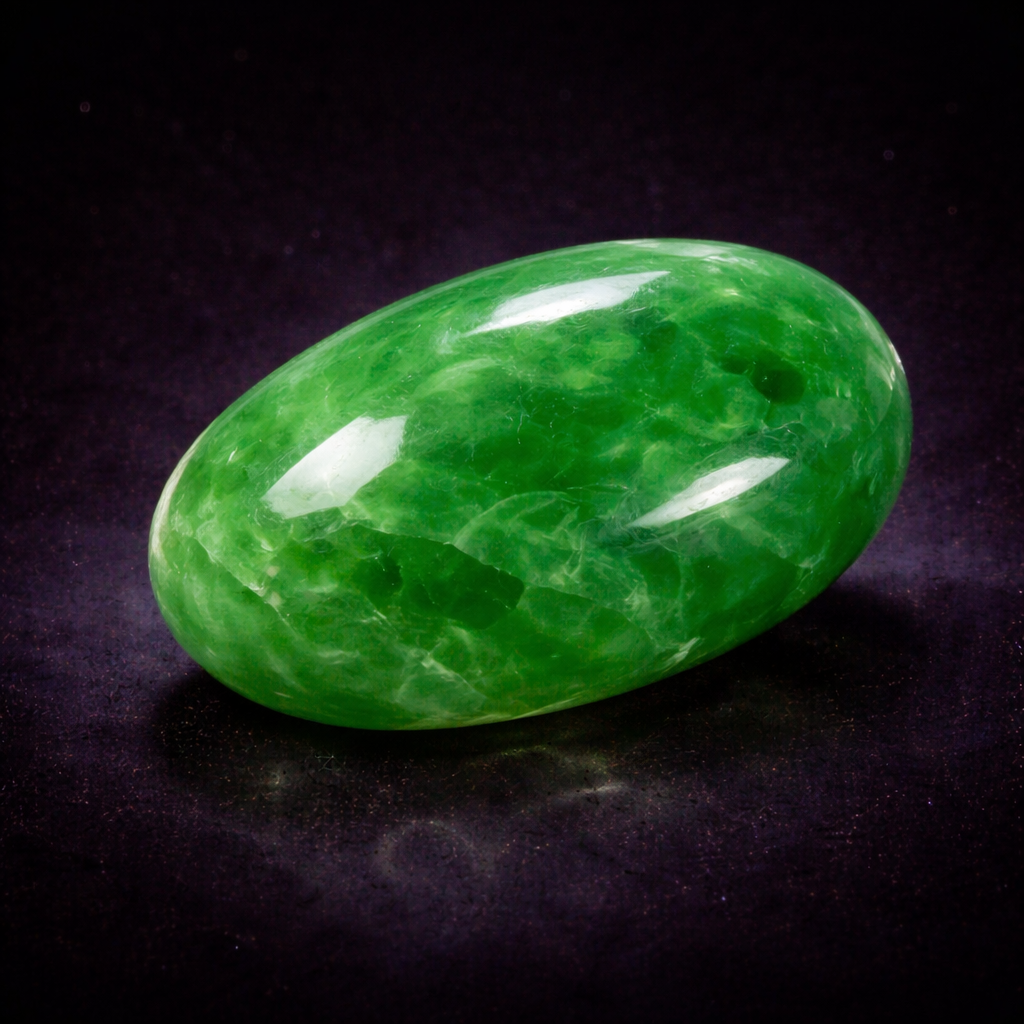
Origins & Geology
Found in: Myanmar, China, Guatemala, New Zealand
The term 'jade' covers two distinct minerals: nephrite (a calcium-magnesium silicate) and jadeite (a sodium-aluminum silicate). Jadeite is rarer and more prized – imperial green jadeite from Myanmar is among the most valuable gemstones in the world. Jade forms in metamorphic rocks under high pressure and is extraordinarily tough despite moderate hardness.
Jade Meaning & Healing Properties
Revered in China for over 7,000 years as the 'stone of heaven', jade embodies virtue, prosperity, and immortality. It is a powerful heart stone that attracts good luck, harmonizes relationships, and promotes emotional balance. In Mesoamerican cultures, jade was more sacred than gold. It is said to bring longevity and protect against illness.
How to Use Jade
- Attracting good fortune and luck
- Harmonising relationships
- Emotional balance and stability
- Longevity and physical health
- Connecting with ancestral wisdom
Jade Facts
- In China, jade has been prized for over 7,000 years – longer than any other gemstone
- Imperial green jadeite can be worth more per carat than diamond
- The Aztecs and Maya considered jade more valuable than gold
- New Zealand Māori culture reveres pounamu (green nephrite) as taonga – a national treasure
How to Cleanse and Charge Jade
Jade is exceptionally tough — its interlocking fibrous structure resists breakage better than almost any other stone, which is why it was carved into tools long before it was carved into ornaments. A brief rinse in cool water is fine, and mild soap will not harm untreated material. The caution concerns treated jade: much commercial jadeite has been acid-bleached and resin-impregnated, and that resin degrades with heat, sunlight and harsh cleaners. Keep salt away, since it dulls the polish, and avoid leaving any jade in strong sun for long periods.
How to Spot Fake Jade
Jade is one of the most imitated stones on the market. Dyed serpentine and quartzite are sold as new jade or Australian jade, and dyed, resin-filled jadeite is graded as B or C jade without always being labelled. Real jade is dense and distinctly cold, takes a soft waxy lustre rather than a glassy one, and when two pieces are tapped together gives a clear, resonant note rather than a dull click. Dyed material shows colour concentrated along cracks and in a web-like pattern under magnification. Given how convincing the fakes are, certification is worth it for anything expensive.
What to Pair Jade With
Jade is associated with steady good fortune and long life rather than with sudden change, so it pairs naturally with green aventurine for opportunity and with citrine for prosperity work. Rose quartz extends it towards the heart and relationships. It sits comfortably with almost anything, since its character is calm rather than assertive — which is also why some people find it too quiet on its own.
Questions People Ask About Jade
Can jade go in water?
Briefly, yes. Untreated jade handles a rinse and mild soap. Be more careful with resin-treated commercial jadeite, which degrades with heat and harsh cleaners.
What is the difference between jadeite and nephrite?
They are two distinct minerals, both called jade. Jadeite is rarer, harder and the source of imperial green; nephrite is tougher, more common and the material of most historic Chinese carving.
How do I know if my jade is real?
Real jade is cold, dense and waxy in lustre, and rings clearly when tapped. Dyed serpentine and quartzite look glassier, feel lighter, and show colour pooling along cracks.
What is jade used for?
Traditionally for longevity, harmony and steady prosperity, and as a protective stone passed down through families rather than bought for a single purpose.
Where to get Jade
If you want to work with Jade as a physical stone, here are three forms commonly used.
As an Amazon Associate, we earn from qualifying purchases.